








Feed efficiency up, corn down. A $1/bu drop is $14.70/cow/month—plus better milk yield if you dial rations tight.
EXECUTIVE SUMMARY: Here’s the straight of it. Cheap corn, combined with tighter feed efficiency, is the fastest way to lift margins right now, faster than most “big” upgrades. A $1/bu corn drop pencils at about $14.70/cow/month—so a 500-cow herd is looking at roughly $7,350 every month that doesn’t leave the farm. USDA’s record crop and sub-$4 futures set the table, while the milk-to-corn ratio near 6.4:1 gives you room to breathe and plan. Layer in the science: automated feed management has shown around $0.85/cwt margin gains when grain is cheap (Journal of Dairy Science backs the mechanism), and genomic testing helps sort cows that convert feed better—small edges that stack into real money. Global demand (China buying, Ukraine uncertain) keeps a floor under corn, so this isn’t “free forever,” but it’s a window worth using. Lock some feed, tune the ration, and—no joke—redirect part of those savings into tech or protocols that keep the gains coming. If there’s a time to try precision feeding in your own barn, it’s now.
KEY TAKEAWAYS:
- Save $14.70/cow/month per $1/bu corn drop (≈$7,350/month on 500 cows)
- Add ≈$0.85/cwt margin with precision feeding during low-grain cycles
- Cut protein costs $18–$25/cow/month via ration reformulation
- Reduce risk of $1.50–$2.50/bu harvest spikes
- Turn savings into durable efficiency

The thing about this year’s grain markets? They’re not whispering—they’re yelling. We have futures trading under $4, basis tightening in pockets, and a milk-to-corn ratio that hasn’t been seen since 2014. If you’ve been around a while, you know these windows don’t stay open. What strikes me about 2025 is how the savings accumulate quickly enough actually to change decisions on-farm—not just tweak them.
What’s Happening in the Fields (And Why It Matters at Your Bunk)
USDA’s August outlook points to a record corn crop—16.74 billion bushels with yield pegged around 188.8bu/acre, and planted acres near 97.3 million, the highest in over a decade. Markets did what markets do: December corn slid below $4. Here’s the interesting part—when corn breaks like this, feed efficiency improvements don’t just look good on paper; they show up in the milk check.
The Corn Math You Can Bank On
- Typical lactating cow: 55lb DMI with ~50% from corn.
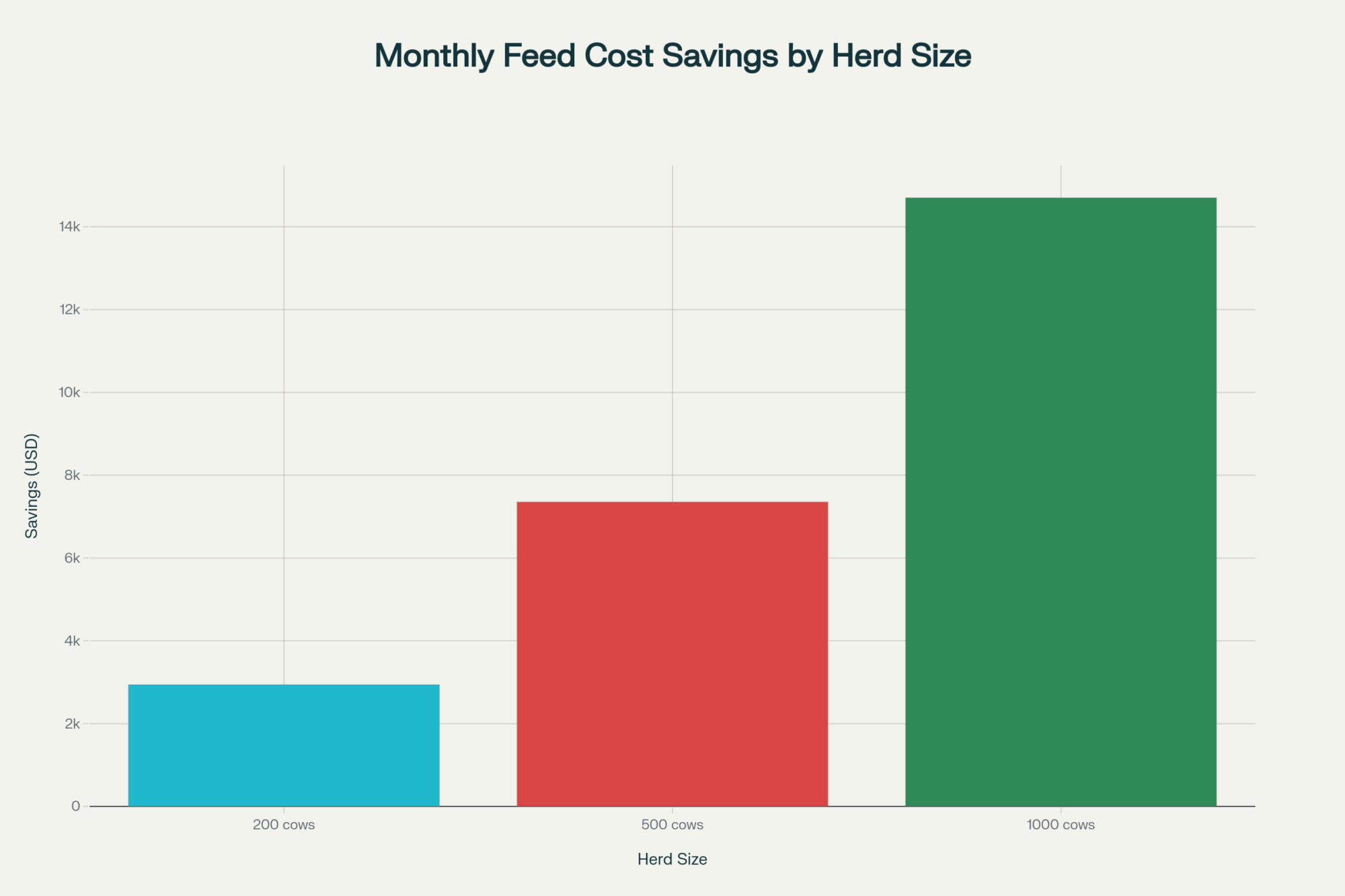
- For every $1/bu drop in corn: ~$14.70/month saved per cow.
- Scale that impact:
- 200 cows ≈ $2,940/month
- 500 cows ≈ $7,350/month
- 1,000 cows ≈ $14,700/month
This aligns with what we’re seeing in program margins: DMC calculations at their strongest since launch, with total feed cost down more than $3/cwt from a year ago. Current trends suggest a milk-to-corn price ratio near 6.4:1—the best efficiency environment in years. It’s not glamorous, but it’s profitable.
Price Isn’t Just Futures: Basis Will Make or Break You
Regional Basis Reality (Don’t Skip This)
- East-central Wisconsin: basis tightened 10–15¢ inside a month last harvest as elevators filled.
- Western New York: 15–20¢ swings when on-farm storage ran out and trucking added a bump.
- Texas Panhandle: feedlot pull firms on a firm basis sooner than you’d like.
Here’s the thing, though… if local space starts to choke, the “cheap” futures price gets quietly eaten by a firmer basis. Timing matters more than bravado.
What Smart Operators Are Doing This Month
Hedging And Layering (Practical Play)
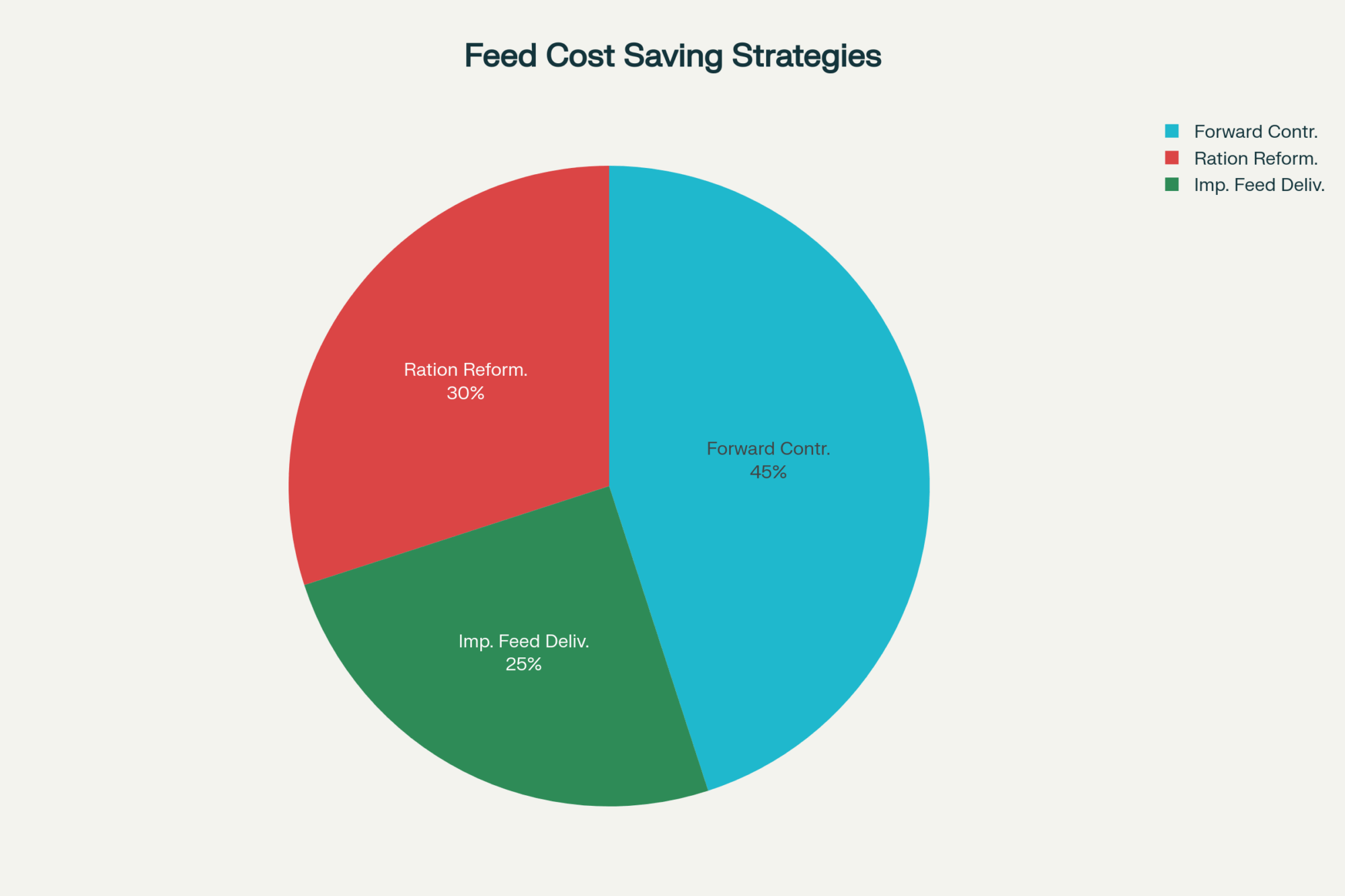
- Forward contract roughly covers 60–70% of corn needs for the next 2–3 quarters.
- Layer basis when it’s in your favor; a 25¢/bu premium today can still insure against $1.50–$2.50/bu pops during harvest hiccups or storage tightness.
- Keep 10–20% unpriced for flexibility.
Turn Savings into Structural Wins
Precision feed management systems are paying back faster—call it 14–18 months—because every 0.1lb butterfat and every 1–2lb of milk reclaimed from consistency and shrink shows up when grain is cheap. In favorable grain environments, you can see about $0.85/cwt margin lift when rations are managed to targets daily, not “most days.” If you’ve been on the fence, this is when the spreadsheet finally turns green.
Protein Is the Curveball (Watch MUN Like a Hawk)
Tactical Protein Moves
- Soybean acreage is lighter; protein prices stay sticky.
- Nutritionists (WI/PA) are leaning into corn gluten feed/meal—often 15–20% cheaper than soybean meal—for mid-lactation cows without losing amino balance.
- Producers are seeing $18–$25/cow/month savings with careful substitution.
The critical factor is MUN. Over-trim protein, and you’ll give back more in lost milk than you saved at the mixer. Aim for MUN in that 10–14mg/dL range (herd and stage-of-lactation dependent), and let tank data—not a spreadsheet—tell you when you’ve gone too far.
Two Real-World Playbooks
Upper Midwest, 450 Cows, Limited Storage
- Lock 50% now on futures + 20% on the basis when the elevator’s number works.
- Add 10–15% for physical storage if you can accommodate temporary storage (such as grain bags or rented space).
- Ration: pull 2–3lb/cow/day from soybean meal into corn gluten feed; watch MUN weekly for a month; adjust.
Idaho, 2,800 Cows, Better Storage and Freight
- Lock 70% needs on futures in tranches over two weeks.
- Capture basis early with your preferred merchandiser before regional draws tighten it.
- Lean into precision feeding—daily DMI tracking, tighter push-up cadence, and feed shrink control (this is becoming more common).
- Use savings to bring forward a mixer or feed center upgrade while rates are still manageable.
Weather And Risk (Because This Is Still Farming)
Late-season heat and dryness in parts of the eastern Corn Belt can still result in a yield loss of 8–12 bu/acre. That’s not panic material, but it’s enough to snap futures and basis together for a week and erase your “I’ll wait” advantage.
Market Floor Signals
- China’s demand, combined with Ukrainian uncertainty, keeps a floor under exports.
- Domestic ethanol grind remains steady.
- Translation: this looks like an opportunity, not a new normal.
Ration Targets Worth Taping to The Feed Room Door
- Starch: mid- to high-20s% of diet DM, matched to forage digestibility.
- NDF: 30–34% of DM with adequate effective fiber; uNDF240 in a range your cows tolerate without butterfat penalties.
- MUN: 10–14mg/dL as a sanity check on protein balance (tighter for fresh cows).
- Shrink: If you’re not measuring yard-to-mouth shrink, assume 6–8% and work it down—cheap corn makes shrink invisible until it doesn’t.
Financing Reality: Price Tech With Today’s Rates
If you’re looking at a $120,000 feed system upgrade, price it with today’s money, not last year’s. At 8–9% interest, a 16-month payback still clears—if you actually capture the $0.85/cwt and reduce shrink by 2–3 points.
Build A Downside Case
- Trim 25% off the projected gains and see if it still pencils out.
- If it does, move.
- If it doesn’t, fix day-to-day management first; technology amplifies habits.
Fresh Cows, Butterfat Checks, And Your Fall Milk
Cheap starch can tempt folks into pushing energy too hard. Keep fresh-cow protocols tight—DKAs and off-feed days erase everything you “saved” on corn.
Small, Boring, Daily Wins… They Stack
- Butterfat still pays. Every 0.1lb bump at current component prices more than covers the extra push-up cycle and better stockpile plan.
- Consistency in feed delivery and push-ups beats heroics.
Alright, So What’s The Move This Week?
Four Practical Steps
- Contact your merchandiser and price 60–70% of your Q4–Q1 corn needs; reserve 10–20% for unpriced options to stay flexible.
- Sit down with your nutritionist for a 30-minute MUN-and-protein audit; outline a measured shift toward corn gluten feed/meal if it fits your cows.
- Walk your feed center with a shrink lens: wind, spills, loader routes, push-up cadence, face management. Fix the obvious stuff first.
- Price the technology you already know you need. If the ROI holds under a conservative milk price and a haircut to the gains—sign it.
The Bottom Line
Here’s what’s particularly noteworthy: this isn’t just “cheap feed.” It’s the kind of margin environment that lets you fix structural problems—feed consistency, storage bottlenecks, ration precision—without starving cash flow. Current trends suggest we’ll look back at late summer ’25 as the stretch when the best dairies got noticeably better. Not louder. Better.
If you want the bottom line without the fluff: lock a good chunk now, don’t get basis-blindsided, tune protein with MUN, and reinvest some of the savings into the places your cows tell you are holding them back. Do that, and you won’t need to time the top—or the bottom. You’ll just keep milking through it.
Complete references and supporting documentation are available upon request by contacting the editorial team at editor@thebullvine.com.
Learn More:
- The TMR Audit: Are You Feeding the Ration You Formulated? – This tactical guide reveals how to conduct a TMR audit on your own operation. It provides practical strategies for closing the gap between the ration on paper and what cows actually eat, ensuring you capture the full value of your feed.
- Is Your Break-Even Cost Lying to You? A New Model for Dairy Profitability – Move beyond temporary gains with this strategic analysis. This article challenges traditional break-even calculations and demonstrates a new model for understanding your dairy’s true profitability, ensuring today’s feed savings build long-term financial resilience.
- Feed Efficiency: The Genomic Trait That Pays the Bills – This piece explores the future of herd improvement by revealing methods for using genomic data to select for feed efficiency. It shows how to breed a more profitable herd that converts cheap feed into more components, creating a durable competitive advantage.
 Join the Revolution!
 Join the Revolution!
Join over 30,000 successful dairy professionals who rely on Bullvine Weekly for their competitive edge. Delivered directly to your inbox each week, our exclusive industry insights help you make smarter decisions while saving precious hours every week. Never miss critical updates on milk production trends, breakthrough technologies, and profit-boosting strategies that top producers are already implementing. Subscribe now to transform your dairy operation’s efficiency and profitability—your future success is just one click away.




