







Did you know tweaking feed efficiency by just 3% could boost your milk yield by a full 600 liters—without a single new heifer in the barn?
EXECUTIVE SUMMARY: Listen, here’s what the numbers are shouting: chasing margins is about tracking your feed and contract details—not just betting on policy or the latest bull. Brazil’s milk powder imports shot up almost 200% this year—now they’re close to 10% of the nation’s supply. And farmgate prices (Cepea/USP) surged 19%, putting average payouts around R$2.65 per liter, but local feed bills ate up most of that uptick for smaller herds. Extension-backed data shows even a simple swap—like moving from corn to citrus pulp—may save you R$12 ($2.50 USD) a cow each month on the ration. Out in Minas, shifting dry-off strategy and adjusting byproduct blends brought milk solids right back to within 3% of top marks, straight from DHI records. These aren’t “miracle fixes”—they’re gritty, on-farm tweaks that’ll matter a lot more than waiting for the next government tariff. With global powder prices bouncing between continents, the guys making real ROI gains are benchmarking their own numbers, not just hanging on every market headline. If you haven’t reviewed your feed or contracts this month, now’s the time—seriously, don’t wait.
KEY TAKEAWAYS
- Feed audits catch hidden losses: Swapping citrus pulp for high-priced corn saved a Santa Catarina herd R$12/cow/month—run your DHI feed report, flag refusals over 5%, and call your nutritionist this week.
- Contract reviews = less market whiplash: Updating price clauses before the November decision keeps you from getting blindsided—grab your agreements, highlight anything renewing in Q4, and talk with your buyer today.
- Data beats drama—every season: With milk price volatility up 19% in 2025 (Cepea/USP), reviewing your margin by pen or group is more valuable than betting on policy swings. Print the past 3 months’ margins, circle problem groups, and compare to the regional benchmark.
- Solids drive dollars: Herds fine-tuning byproduct blends and early dry-off routines bounced back to within 3% of DHI highs—ask your extension agent for the latest trial results and match what’s working.
- Global moves, local impact: Brazil’s import boom is rippling right back to your bulk tank—smart farms are watching South American trends and acting fast, not waiting to hear about it secondhand.
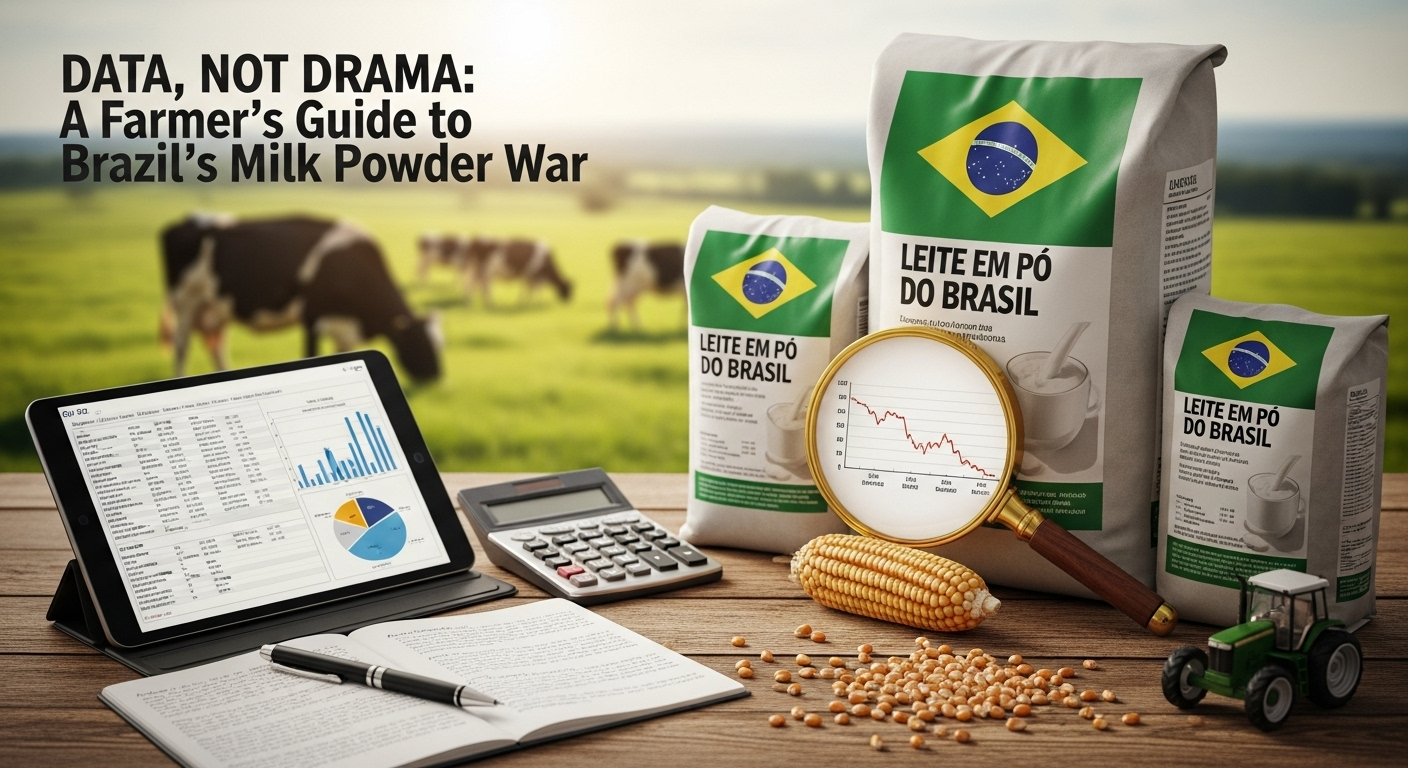
The thing about all this antidumping talk in Brazil is—whether you’re milking 100 cows in a tie-stall outside Pato Branco or you’ve got 500 cows on robots just north of Uberaba—it finally feels personal, doesn’t it? It’s no longer just a trade attorney’s headache. By the time rumors trickle down, feed prices are up, contracts are on edge, and every cent of margin just seems to leak away in another round of policy limbo.
And—here’s what international folks sometimes miss—while the action is playing out on Brazilian soil, the lessons on managing wild market swings (and the potential splash that could hit global milk powder prices) matter to every dairy producer, wherever you farm.
The Ground Truth vs. The Government Timeline
What’s actually happening (as opposed to the stuff you hear at the feed store)? At the end of last year, Brazil’s Ministry of Development launched a formal investigation into the rising imports of milk powder from Argentina and Uruguay, which prompted a thorough review of the books—this was conducted by law firm Trench Rossi Watanabe. Imports just about tripled year-over-year in early 2024, and now make up nearly 10% of Brazil’s total dairy product market, according to data from DatamarNews.
Here’s the rub: waiting on Brasília to hand you a plan is a recipe for lost sleep and lost dollars. The investigation is not yet complete. The latest updates in August 2025 indicate that we’ll hear the verdict in November, and then there’ll be more noise about tariffs, supply chains, or whatever else the suits may bring up. In the meantime? Limbo is as risky as drought.
On-Farm Wins: Small Data, Big Margins
Milk price volatility has been downright wild this year. The Center for Advanced Studies on Applied Economics (Cepea/USP) reported a 19% leap in farmgate pay earlier this spring, averaging R$2.65/liter nationwide, based on Cepea/USP data. Around here, I compared that to our co-op payouts in western Paraná—pretty much checks out, but with feed climbing, smaller herds aren’t pocketing much from that bump.
The internet’s full of slick farm success stories, which mostly sound too polished for my taste. What’s actually happening? Take a freestall operation near Joinville—this is an extension-backed logging group that feeds refusals every Thursday. Over the course of six weeks, they flagged their mid-lactation pen slipping and swapped part of their corn with citrus pulp (a move that is becoming more common due to feed prices in their area). The swap, verified by their nutritionist and extension agent, resulted in a monthly reduction of approximately R$12 per cow in feed costs. Margin tracked in their latest DHI and compared to Embrapa regional averages.
In Minas Gerais, a dry-lot operation with 420 cows and wash tanks is struggling to meet its milk solids targets. The herdswoman pored over her DHI reports, found her cottonseed/citrus pulp blend wasn’t cutting it anymore (after a February price jump), and—per Embrapa’s 2024 benchmarking—she shifted to a soy hull blend. After four weeks helping the top 60% of cows and drying off her lowest 10%, yields edged back up, landing within 3% of last year’s best month.
What strikes me is this: it’s not endless tech upgrades; it’s tracking the basics, troubleshooting with real data, and looping in extension support when the answers aren’t obvious. Buzzwords like “precision feeding” come and go, but auditing refusals by pen, checking solids, and getting eyes from outside—that’s what moved margins in these herds.
De-Risking Your Contracts and Your Feed Bill
Now, contract risk—this isn’t just big herd territory. When feed and powder prices swing, anyone selling milk can pull their contract file and flag what’s locked in past November. In my local group, herds with fewer than 250 cows have started swapping weekly price information—tacked up next to calving records. That old-school, bulletin-board style has actually caught two milk buyer price dips since May. No fancy app needed.
If you’re buying feed on the spot market? Pause, pull out your ration cost record, and calculate exactly what a 10% increase in feed price would do to your margins over 30 days. If you can’t make the math work in half an hour, consider getting an extension agent or a DHI tech to walk you through it. That single calculation—before Brazilian regulators or anyone else make a move—can save you from getting blindsided.
Your Monday-Morning Action Plan
Here’s what herds are actually doing where I farm—and what you can do, wherever you farm:
- Weekly Feed & Milk Data Pull: Review last month’s DHI milk weights and feed refusals by group. Flag any pen off more than 5% and call your nutritionist by Friday.
- Contract Review: Go through all supply/selling contracts. Highlight those renewing after November and schedule a call with your buyer for next week to discuss price adjustment clauses.
- Feed Cost Audit: Grab the past three feed bills and compare the average cost/ton to last fall. Anything above 8% triggers a call to your supplier, promptly.
- Team Huddle: Get someone besides the herdsperson (your feeder, sibling, etc.) to check pen SCC trends—anything inching near your co-op penalty trigger should be addressed before it hits.
Look—the suits in Brasília or Buenos Aires aren’t going to balance your ration or renegotiate the powder load. By November, policy may change, but most of your profit or losses will already be determined by the time you reach your feed table. Benchmark against your last two seasons, not just the headlines.
The Global Ripple
This development isn’t just a local shake-up. Every international trader, co-op manager, and powder buyer from Wisconsin to Wanganui should keep a close eye on Brazil. Their market moves set the tone for price volatility far from South America. Herds that win? They don’t wait for international trade drama—they get their data right, game out “what-ifs,” and stop hoping for a regulatory rescue.
It’s not always pretty, but that’s farming at its most real.
Complete references and supporting documentation are available upon request by contacting the editorial team at editor@thebullvine.com.
Learn More
- The Dairy Signal: Is It Time to Rethink Your Cost of Production? – This article provides a tactical framework for the deep-dive financial analysis encouraged in the main piece. It reveals practical methods for identifying hidden inefficiencies beyond the feed bunk, helping you make targeted cuts that directly improve your margins.
- Riding the Dairy Market Roller Coaster: Strategies for Navigating Price Volatility – For a strategic view on the market chaos described, this piece is essential. It moves beyond a single trade issue to explore long-term risk management, helping you build a more resilient business model that can withstand future market shocks.
- Don’t guess, TEST! The new frontier in genomic testing. – While the main article champions operational data, this piece explores an innovative data frontier: genomics. It details how using genetic insights to select for efficiency and health traits provides a powerful, long-term strategy for permanently reducing costs and future-proofing your herd.
 The Sunday Read Dairy Professionals Don’t Skip.
 The Sunday Read Dairy Professionals Don’t Skip.
Every week, thousands of producers, breeders, and industry insiders open Bullvine Weekly for genetics insights, market shifts, and profit strategies they won’t find anywhere else. One email. Five minutes. Smarter decisions all week.




