






Butter just jumped 2.75¢ while cheese tanked – your component mix could mean $1.20/cwt difference in your milk check this month.
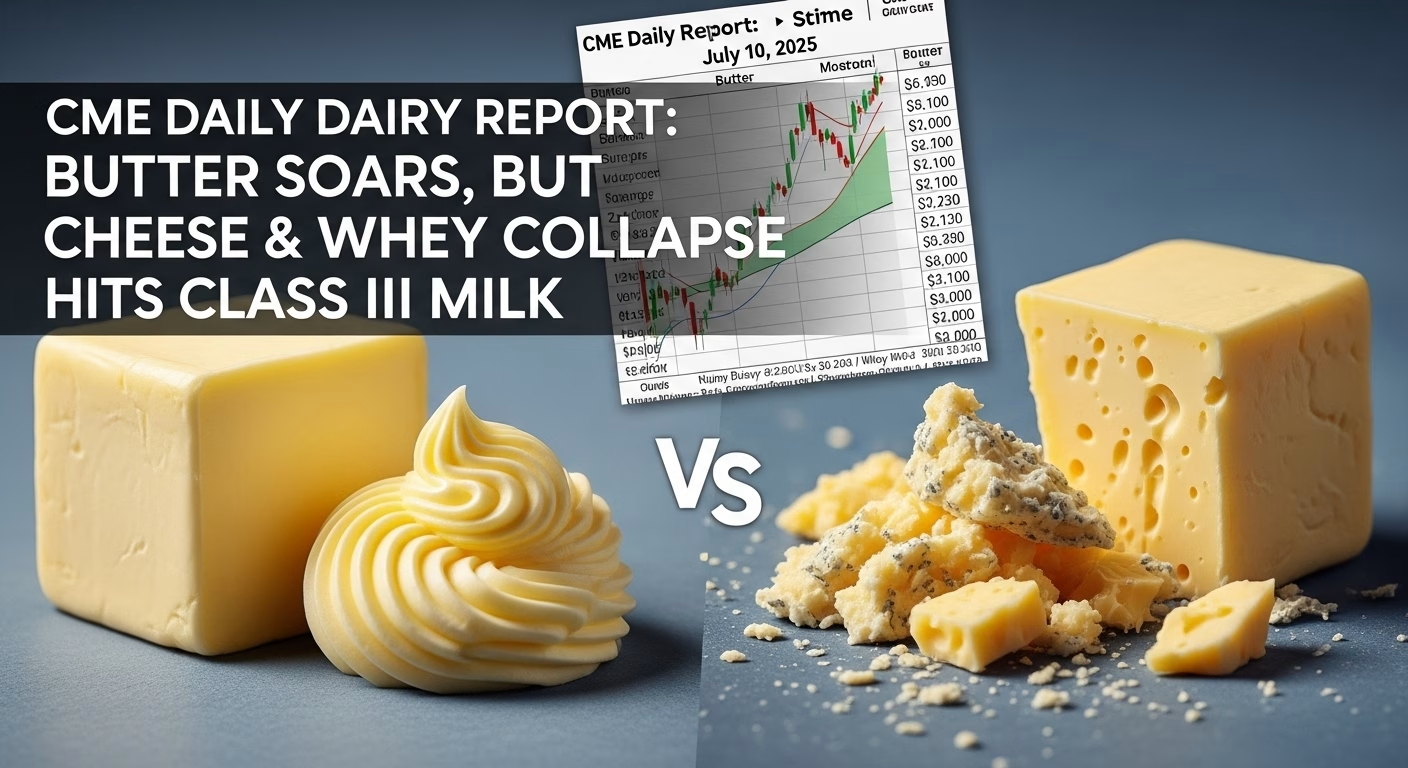
EXECUTIVE SUMMARY: Grabbed my coffee this morning and saw something that’ll make you rethink everything about your operation. Component management isn’t just nice-to-have anymore – it’s literally the difference between profit and breaking even in 2025’s market reality. Today’s numbers tell the whole story: butter rocketed up 2.75¢ to $2.59/lb while cheese blocks and barrels both took a beating, and dry whey? Don’t even get me started – down 2.75¢ in one session. With your milk-to-feed ratio sitting at a tight 2.21 (way below that comfortable 2.5-3.0 range), every component point matters more than it has in years. The Class III/IV spread is widening fast, and farms with strong butterfat genetics are literally banking an extra $1.20/cwt compared to their protein-heavy neighbors. Global production’s up 1.6%, new FMMO rules just kicked in last month, and processors are flush with cheese inventory… but here’s the kicker – they’re still bidding hard for butterfat. You need to start thinking like a component manager, not just a milk producer.
KEY TAKEAWAYS:
- Lock in that Class IV premium now – With futures above $19.00 and butter strength holding, high-butterfat producers should forward contract 25-30% of Q4 production immediately. That’s potentially $380 extra per cow annually.
- Feed efficiency beats total volume – Your 2.21 milk-to-feed ratio means every pound of milk costs $0.45 in feed. Focus genomic selection on butterfat percentage and feed conversion – not just total production. Smart money’s on cows that convert cheaper.
- Component testing pays for itself – Install real-time component monitoring if you haven’t already. With the new FMMO pricing formula effective since June, knowing your daily fat/protein split gives you pricing power your co-op neighbors don’t have.
- Hedge your protein exposure – Cheese markets are heavy and whey just collapsed. If you’re protein-heavy, grab some Dairy Revenue Protection or Class III puts for August-October milk. Don’t ride this one out naked.

Look, I’ve been watching these markets for twenty years, and today’s action isn’t just a blip. It’s the new reality where your genetic choices from three years ago determine whether you’re profitable today. Time to act like it.
Today’s trading session delivered a classic tale of two dairy classes, with butter surging 2.75¢ to $2.59/lb while the cheese complex took a beating that’s going to sting your Class III returns. Both cheese blocks and barrels fell, with dry whey getting hammered for a 2.75¢ drop.
Bottom line for your operation: The weakness in cheese and whey is putting direct pressure on your upcoming milk checks. While that butter rally is welcome news for Class IV producers, the heavier weighting of cheese in the Class III formula means today’s slide hurts more than the butter strength helps your overall milk price.
Today’s Price Action: Component Divergence in Full Display

The market delivered a clear message today – butterfat is king, but protein markets are struggling. This divergence is widening the gap between Class III and Class IV values, making your component mix more important than ever.
| Product | Closing Price | Today’s Move | 5-Day Change | Real Impact on Your Farm |
| Cheese Blocks | $1.6850/lb | -1.00¢ | -1.56¢ (-0.9%) | Puts downward pressure on Class III price |
| Cheese Barrels | $1.7100/lb | -1.75¢ | +0.38¢ (+0.3%) | Weakness will be felt in the milk check |
| Butter | $2.5900/lb | +2.75¢ | +0.06¢ (+0.02%) | Provides solid support for the Class IV price |
| NDM Grade A | $1.2650/lb | -0.25¢ | +0.62¢ (+0.5%) | Holding relatively steady, exports are key |
| Dry Whey | $0.5625/lb | -2.75¢ | -0.94¢ (-1.6%) | Significant drop adds to Class III weakness |
Market Commentary
Today’s story is all about the components. The butter market continues to find buyers, driven by steady domestic demand from retailers and food service as the summer progresses. Processors are bidding actively to keep churns running, and that 2.75¢ jump shows real conviction.
However, the cheese complex is feeling heavy. Strong milk production nationwide means cheese vats are full, and with 21 loads of blocks trading today, sellers were clearly motivated to move product. While barrel cheese is no longer used in the Class III pricing formula under the new FMMO rules, its price remains a key indicator of bulk cheese supply and market sentiment. The significant 2.75¢ drop in dry whey is also a major headwind for the Class III price, suggesting that inventories are ample and buyers can afford to be picky.
This divergence will likely keep the Class III/IV spread wide, favoring farms with higher butterfat production.
Trading Floor Intelligence & Market Mechanics
Bid/Ask Spreads
In the cheese markets, the bid-ask spread was relatively tight, with five bids and no offers for blocks at the close, indicating that sellers were aggressive and found their price. The butter market exhibited a wider spread, with four bids and eight offers, suggesting that some sellers were holding out for higher prices, but buyers weren’t willing to chase them much further after the initial run-up.
Trading Volume
Cheese volume was robust, with 21 loads of blocks and six loads of barrels changing hands. This relatively high volume on a down day gives more weight to the negative price move, suggesting it has some fundamental backing. Butter volume was lighter at six loads, indicating the price move higher may have been on less conviction than the drop in cheese.
Intraday Patterns
Cheese prices were soft throughout the session. The selling wasn’t a last-minute dump but rather a steady drip of offers that overwhelmed the bids. Butter, conversely, saw its strength early in the session and held those gains into the close.
Global Market Competitive Landscape
International Production Watch
- EU: Milk production remains tight, with forecasts indicating a slight year-over-year decline due to environmental regulations and squeezed farmer margins. This provides a supportive backdrop for global dairy prices.
- New Zealand: Fonterra announced its 2025-26 farmgate milk price forecast at $10.00 per kilogram of milk solids, with a range of $8.00 to $11.00. This strong forecast reflects ongoing robust global demand for dairy products, particularly in Asia-Pacific markets.
Where We Stand Globally
U.S. butter prices are currently competitive; however, our cheese prices are facing pressure from global supply. The U.S. Dollar has been trading in a range against major currencies, but any strengthening makes our exports more expensive for foreign buyers, a potential headwind we’re monitoring closely.
Feed Costs & Your Bottom Line
Feed futures were mixed today, offering little relief to your margins, especially with the pressure on Class III milk.
- Corn (Dec ’25): $4.16/bu
- Soybean Meal (Dec ’25): $285.30/ton
- Premium Alfalfa Hay: ~$300/ton (regional average)
Milk-to-Feed Ratio
Based on today’s July Class III future of $17.39 and current feed prices, the milk-to-feed ratio sits at approximately 2.21. This is a tight number, below the 2.5-3.0 range generally considered necessary to cover all costs and generate a profit. It highlights the importance of managing feed costs and capitalizing on favorable milk prices when they arise.
Production & Supply Reality Check
The latest USDA Milk Production report showed U.S. milk production up 1.6% year-over-year in May 2025, reaching 19.93 billion pounds. The national dairy herd grew to 9.455 million head, up 114,000 from May 2024. This steady, albeit modest, growth in supply is enough to keep cheese vats and processing plants well-supplied, preventing any major supply-driven price spikes for now.
Production per cow averaged 2,110 pounds in May, up 7 pounds from the previous year. Favorable weather in key dairy regions has supported this production trend, but it’s also contributing to the pressure we’re seeing in the cheese markets.
What’s Really Driving These Prices
Domestic Demand
Retail butter demand is seasonally solid. Food service is stable. However, cheese inventories at the processing level appear more than adequate, leading to the softer prices we saw today.
Export Markets
- Mexico remains our most critical export partner, although recent reports indicate some volatility in shipment volumes.
- Southeast Asia: A key battleground for NDM and whey against New Zealand and the EU. Demand growth is present, but these markets remain price-sensitive.
- China: Continued weakness in Chinese demand for powders and whey has been a major bearish factor. Today’s weakness in whey directly reflects this global reality.
Forward-Looking Analysis
USDA Projections
USDA’s June 2025 World Agricultural Supply and Demand Estimates raised dairy product price forecasts: cheese to $1.86/lb (up 2¢), butter to $2.535/lb (up 7.5¢), and dry whey to 56.5¢/lb (up 3¢). The 2025 all-milk price forecast was increased based on recent price strength.
Futures Market Guidance
- Class III (Jul): Settled at $17.39/cwt. The market is pricing in the weakness from the spot cheese and whey markets.
- Class IV (Jul): Settled at $19.01/cwt. The futures market clearly reflects the strength in butter and shows a significant premium over Class III.
Hedging Opportunities
The current spread between Class III and IV offers a clear signal. If your milk is heavily weighted to protein, consider strategies to protect your floor price. If you have high butterfat, the Class IV futures offer an attractive level to lock in prices.
Regional Spotlight: Upper Midwest
In Wisconsin and Minnesota, milk production is in its seasonal stride. The region continues to be a major contributor to the 1.6% national production increase, with favorable weather leading to good forage quality and strong milk flows. This ample supply is a key reason for the pressure on the spot cheese market, as a significant portion of the region’s milk is directly converted into cheese.
The local basis remains relatively stable, but a drop in the CME spot price will be felt in producer checks if it persists.
What Farmers Should Do Now
Review Your Hedges
With Class III weakening, now is the time to ensure you have downside protection. Look at Dairy Revenue Protection (DRP) or put options on Class III futures to establish a price floor for your third and fourth-quarter milk.
Talk to Your Nutritionist
The wide Class IV-III spread means butterfat is king. Work with your nutritionist to see if there are cost-effective ways to optimize butterfat components in your herd.
Price Your Class IV Milk
If you haven’t priced any of your second-half Class IV milk, the futures market is offering attractive levels above $19.00. Consider layering in some forward contracts to lock in these strong prices for a portion of your production.
Industry Intelligence
Processing Plant Expansion
Lactalis USA recently announced a $75 million investment in its New York facilities, including $60 million for the Buffalo plant to increase ricotta and mozzarella production by 37 million pounds annually, and $15 million for the Walton facility to boost cottage cheese and sour cream output by 30%. These facilities process milk from 236 area farms, demonstrating continued processor confidence in demand growth.
Regulatory Update
The Federal Milk Marketing Order reforms became effective June 1, 2025. Key changes include elimination of barrel cheese from pricing formulas (using only block cheese), increased make allowances, and revised Class I pricing mechanisms. These changes will impact how your milk is priced starting with June milk marketings.
Put Today in Context
Today’s drop in cheese prices broke the market out of its recent sideways channel. While the 5-day trend shows mixed results, the move today was significant because of the high volume, suggesting a potential shift in sentiment.
The divergence between butter and cheese has been a recurring theme this year, but it was particularly pronounced today. This isn’t just market noise – it’s a fundamental statement about the current supply and demand for different dairy components.
The message is clear: Component management is more critical than ever. Know your milk’s fat and protein percentages, understand how they translate to Class III versus Class IV pricing, and manage your risk accordingly. With milk production continuing to grow at a rate of 1.6% annually and new processing capacity coming online, staying ahead of market signals will be crucial for maintaining profitability.
Complete references and supporting documentation are available upon request by contacting the editorial team at editor@thebullvine.com.
Learn More:
- 11 Proven Strategies to Lower Feed Costs and Boost Efficiency on Your Dairy – Practical strategies for implementing the feed efficiency improvements highlighted in today’s tight 2.21 milk-to-feed ratio, with actionable steps to reduce costs by 10-20% and boost profitability immediately.
- USDA’s 2025 Dairy Outlook: Market Shifts and Strategic Opportunities for Producers – Strategic context for today’s component divergence trends, revealing how USDA’s revised forecasts align with current Class III/IV spreads and what this means for your long-term positioning.
- 5 Technologies That Will Make or Break Your Dairy Farm in 2025 – Demonstrates how cutting-edge monitoring technologies can optimize the component management strategies essential for capturing today’s butterfat premiums and maximizing returns in volatile markets.
 Join the Revolution!
 Join the Revolution!
Join over 30,000 successful dairy professionals who rely on Bullvine Weekly for their competitive edge. Delivered directly to your inbox each week, our exclusive industry insights help you make smarter decisions while saving precious hours every week. Never miss critical updates on milk production trends, breakthrough technologies, and profit-boosting strategies that top producers are already implementing. Subscribe now to transform your dairy operation’s efficiency and profitability—your future success is just one click away.




