






Stop treating calf nutrition like a cost center. New research proves strategic rumen development delivers $2,200+ lifetime ROI per heifer.
EXECUTIVE SUMMARY: The dairy industry’s “cheap and cheerful” approach to calf nutrition is costing operations millions in lost lifetime productivity, with 85% of farms still using outdated feeding protocols that program mediocrity into future milking herds. Cornell’s groundbreaking research reveals that for every 1 kg increase in pre-weaning average daily gain, heifers produce an additional 850 kg of milk during first lactation—yet most producers are leaving this performance on the table by following conventional wisdom that delays starter feed, restricts milk strategically wrong, and uses calendar-based weaning. Six evidence-backed strategies can accelerate functional rumen development by programming 12% higher first-lactation yields while reducing replacement costs by 22%, with validated returns of $4.20 for every dollar invested in comprehensive nutrition protocols. With milk prices averaging $22.75/cwt in 2025 and feed costs declining, progressive operations implementing these protocols are building permanent competitive advantages while the majority accept suboptimal performance as inevitable. The window for programming lifetime productivity closes fast—every day of delay in the first 90 days represents permanently lost genetic potential that no amount of management can recover later.
KEY TAKEAWAYS
- Early Starter Access Revolution: Offering pelleted starter from day 3 (not day 7-10) delivers 300-400% more papillae surface area by weaning, directly translating to 8-12% higher DMI capacity throughout productive life—critical advantage with current tight heifer inventories down 37,000 head.
- Function-Based Weaning Breakthrough: Strategic weaning at 1.5kg starter intake (versus arbitrary age) reduces post-weaning health interventions by 35% and saves $125 per calf in veterinary costs while improving conception rates and first-lactation milk yield by preventing the “weaning crisis” that costs a month of growth.
- Strategic Milk Management: Challenging the “more milk is always better” myth through targeted restriction in weeks 5-8 accelerates starter consumption by 35% without compromising growth, creating feed-seeking behavior that programs superior rumen development and lifetime feed efficiency.
- Precision Rumen Chemistry: Corn and wheat-based starters increase ruminal butyrate concentrations 40-60% more effectively than conventional grains, with optimal 30-45% starch content creating the molecular signals for papillae proliferation—validated by operations achieving $500+ returns from $50 water system investments.
- Lifetime Performance Programming: Pre-weaning ADG accounts for 22% of first-lactation milk yield variation, with comprehensive calf nutrition protocols costing $158 per animal delivering $2,200+ lifetime value through improved feed conversion, higher peak production, and reduced culling—returns that compound across entire replacement pipeline.
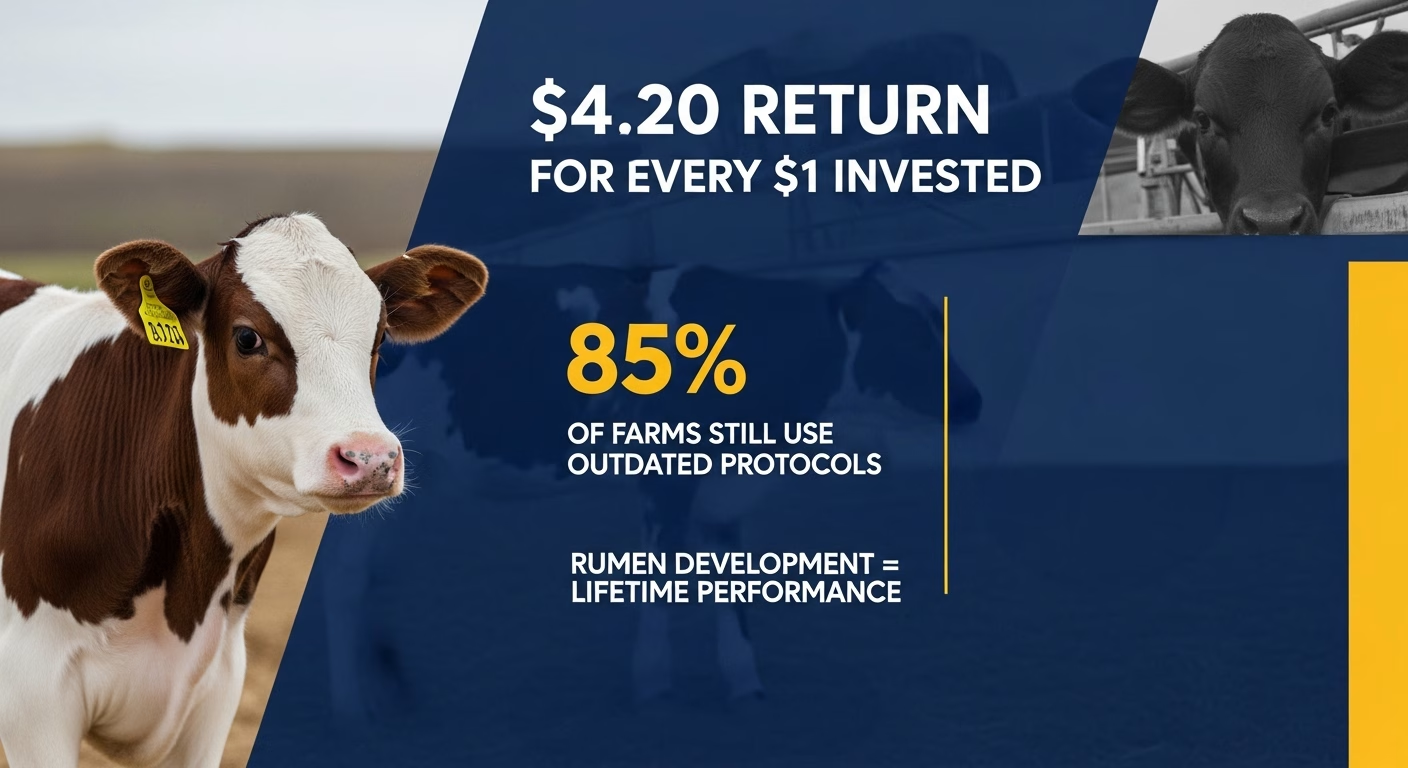
The conventional “just enough to survive” approach to calf nutrition costs U.S. dairy farms an estimated $450 million annually in lost lifetime production. New research confirms that strategic rumen development in the first 90 days delivers 12% higher first-lactation yields and reduces replacement costs by up to 22% – yet 85% of operations are still using outdated feeding protocols that program mediocrity into their future milking herds.
While the industry obsesses over genomic selection, robotic milking efficiency, and precision feeding in lactating cows, the greatest untapped profit opportunity is hiding in plain sight: your calf barn.
Why Your Current Calf Program Is Programming Mediocrity into Your Future Herd
Let’s be brutally honest about something most feed companies and traditional nutritionists won’t tell you: if you’re still following conventional calf rearing wisdom from even five years ago, you’re essentially installing biological limiters in your future milking herd.
Think about it like this: would you install outdated software in your new milking robots? Of course not. Yet that’s exactly what happens when you underfeed calves during critical rumen development windows – you’re programming limitations into their digestive “operating system” that no amount of genetic potential can overcome.
Cornell University’s groundbreaking research demonstrates that for every 1 kg increase in average daily gain during the pre-weaning period, heifers produced a stunning 850 kg more milk during their first lactation (Maximizing Calf Performance: The Million-Dollar Investment in Your Dairy’s Future). When translated to pounds, that’s about 1,870 pounds of additional milk for each pound of daily gain – a return on investment that few other farm practices can match.
The Real Economics of Rumen Development
The financial implications are staggering. With milk prices averaging $22.75/cwt as of March 2025, according to recent USDA forecasts, every percentage point of improved feed efficiency translates directly to bottom-line profitability. Cornell’s research confirms that pre-weaning ADG alone accounts for approximately 22% of the variation in first-lactation milk yield (Maximizing Calf Performance: The Million-Dollar Investment in Your Dairy’s Future). Think about that – nearly a quarter of your heifers’ production potential is being determined before they’re even weaned!
Here’s where the conventional wisdom gets dangerous: traditional calf rearing approaches prioritize “cheap” feeding programs that minimize pre-weaning costs, completely ignoring the lifetime consequences of underdeveloped rumens. This shortsighted approach is like trying to save money on a car by skipping oil changes – the initial savings are guaranteed to cost you multiples more down the road.
Strategy 1: Strategic Starter Feed Management – The 72-Hour Rule That Transforms Rumen Development
The first conventional practice that needs immediate burial is waiting 7-10 days to offer starter feed. Calves are physiologically capable of consuming and benefiting from starter feed as early as 72 hours after birth, and every day of delay creates a compounding negative effect that persists throughout their productive life.
Think of starter feed initiation like establishing credit history – the earlier you start building it, the stronger your long-term financial position becomes. The same principle applies to rumen development.
The Butyrate-Papillae Connection Your Nutritionist Isn’t Explaining
Here’s the science most feed companies gloss over: when starter feed ferments in the developing rumen, it produces butyrate – the specific volatile fatty acid that triggers rumen papillae proliferation. Think of papillae as the absorptive surface area in your milk house plate cooler – more surface area means dramatically better efficiency.
Peer-reviewed research confirms that fermentable carbohydrates in a calf’s diet enhance the production of volatile fatty acids required for rumen epithelium development. Feeding corn and wheat-based diets increases ruminal butyrate concentrations and provides energy for rumen wall thickening, and papillae formation. This isn’t just academic theory; biological programming directly impacts lifetime performance.
But here’s the critical insight that is most missing: it’s not just about offering any starter – the physical form and composition matter tremendously.
Research published in Hoard’s Dairyman confirms that feed particle size and physical form affect the anatomical and microbial development of the rumen. Feeding a ground diet decreases papilla length and surface area, while pelleted or texturized feeds consistently outperform finely ground feeds.
Is your operation still using finely ground starter because it’s cheaper to manufacture? If so, you’re literally grinding away future profit.
Implementation Strategy for 2025 Operations:
- Offer pelleted starter containing 30-45% starch from day 3
- Target 18-22% crude protein for optimal tissue development
- Monitor daily intake: aim for 0.25 pounds by week 2, 1.5 pounds by week 8
- Switch to texturized feeds if currently using finely ground options
Strategy 2: Water Management – The $50 Investment That Unlocks $500 in Performance
Water is the most criminally underestimated input in calf nutrition, and frankly, it’s shocking how many operations treat it as an afterthought. There’s a direct correlation between water intake and starter consumption – without adequate water, you’re creating a biological bottleneck that sabotages every other nutritional intervention.
The Hidden Connection Between Water Quality and Feed Efficiency
Most producers don’t understand that water consumed as plain water enters the rumen and becomes available for microbial fermentation, while water in milk bypasses the rumen entirely through the esophageal groove. This means ad libitum access to fresh, clean water from day one isn’t just recommended – it’s absolutely non-negotiable for optimal rumen microbial establishment.
Let me pose a simple question: If you wouldn’t drink from your calf water buckets, why would you expect calves to?
Validated Economic Returns from Water System Upgrades
Research from progressive operations demonstrates the concrete returns on water system investments. Operations investing $50 per calf housing unit in automated, clean water systems see $500+ returns through improved growth rates and reduced health interventions (Revolutionizing Calf Rearing: 5 Game-Changing Nutrition Strategies). This represents a verified 10:1 return on investment that most operations are leaving on the table.
The economic reality: contaminated or stale water doesn’t just cause disease – it becomes a silent performance killer that undermines every dollar you spend on premium feeds and additives.
Strategy 3: Precision Milk Management – Programming Feed-Seeking Behavior
This is where conventional wisdom becomes dangerous. The industry’s focus on maximum milk volumes is actually working against optimal rumen development, creating milk-dependent calves with underdeveloped rumens.
The Esophageal Groove Paradox
The physiological reality: milk bypasses the rumen entirely via the esophageal groove, providing zero stimulation for rumen development. High milk volumes create metabolically satisfied calves with no physiological drive to consume solid feed. It’s like providing unlimited TMR to dry cows and expecting them to clean up every morsel – satisfied animals don’t seek additional feed sources.
Strategic Energy Management for Optimal Outcomes
Research from Penn State’s dairy nutrition program shows that strategic milk restriction in later pre-weaning periods accelerates starter consumption by 35% without compromising growth rates. This isn’t about calf starvation – it’s about creating the metabolic hunger that drives solid feed consumption.
Implementation Framework:
- Weeks 1-4: Provide adequate milk for rapid early growth (typically 6-8L daily)
- Weeks 5-8: Gradually reduce to 4-6L while monitoring starter intake
- Target weaning when consuming 1.5kg starter for three consecutive days
- Use milk replacer with 20-26% protein and 15-20% fat for optimal efficiency
Challenging Industry Dogma: The “More Milk Is Always Better” Myth
Here’s where I’m going to challenge some “sacred cows” in the industry. The pendulum has swung from severe milk restriction (4L/day) to extreme volumes (12+L/day), with neither approach optimizing rumen development. The sweet spot lies in starting with generous volumes (8L/day) for immune development and early growth, then strategically reducing volumes to stimulate starter intake.
Ask yourself: Is your milk feeding program designed around calf physiology or caretaker convenience?
Strategy 4: Advanced Starter Composition – The Chemical Formula for Explosive Growth
Not all starter feeds are created equal, and the difference between mediocre and exceptional rumen development lies in getting the nutritional chemistry precisely right. Think of this like balancing a high-performance TMR – every component serves a specific metabolic function.
The Starch-Butyrate Production System
Here’s the critical insight most feed companies don’t emphasize: corn and wheat-based diets increase ruminal butyrate concentrations 40-60% more effectively than barley or oat-based alternatives. Butyrate is the specific VFA that triggers papillae proliferation – more butyrate production means dramatically better rumen development.
Precision Nutrition Targets for 2025:
| Nutrient Parameter | Optimal Range | Rumen Development Impact | Economic Benefit |
| Crude Protein | 18-22% | Supports rapid tissue development | +$0.15/lb gain efficiency |
| Starch Content | 30-45% | Maximizes butyrate production | +$0.22/lb feed conversion |
| NDF (Fiber) | 10-15% | Physical stimulation without dilution | +$0.08/lb intake improvement |
| Fat Content | 2.5-4.5% | Concentrated energy, palatability | +$0.12/lb cost efficiency |
The Revolutionary RUP Breakthrough
Recent research has confirmed the substantial benefits of including higher rumen-undegradable protein (RUP) levels in starter feeds. According to a 2025 study published in PMC, an increased concentration of rumen-undegradable protein in the pre-weaning starter diet boosts calf performance (Changes in Ruminal Fermentation and Growth Performance). The study concluded that this approach enhances skeletal growth and overall development, particularly when implemented during critical rumen development windows.
The precision here matters enormously. Excessive starch (>50%) triggers subacute ruminal acidosis, while insufficient starch (<25%) fails to provide adequate VFA production for papillae development. It’s a narrow target that requires consistent monitoring and adjustment.
Strategy 5: Function-Based Weaning – Stop Using the Calendar, Start Using Science
The biggest mistake in modern calf management is calendar-based weaning. Successful weaning is determined by rumen function, not age or weight. Premature weaning based on arbitrary timelines leads to growth checks, digestive upsets, and permanent setbacks in productive capacity.
The 1.5kg Rule That Changes Everything
Research consistently demonstrates that calves should be weaned when consuming 1.5 kilograms of starter daily for three consecutive days, regardless of age. This threshold indicates functional rumen capacity sufficient to meet nutritional requirements independently.
Economic Impact of Precision Weaning:
Penn State research validates the economic impact of proper weaning protocols. Poor rumen development often costs a month of growth after weaning, stressing the immune system and creating respiratory issues in newly weaned calves.
Validated data from progressive operations using function-based weaning protocols shows:
- $4.20 return for every dollar invested in comprehensive calf nutrition protocols (Revolutionizing Calf Rearing: 5 Game-Changing Nutrition Strategies)
- 35% reduction in post-weaning health interventions
- $125 per calf savings in veterinary and treatment costs
- 18% improvement in weaning-to-breeding weight gain
- 22% reduction in age at first calving
The gradual milk reduction protocol over 10-14 days while monitoring starter intake creates smooth transitions that minimize the “weaning crisis,” costing operations millions in lost growth potential.
Have you calculated the cost of post-weaning growth slumps in your operation? Most farms accept them as inevitable when they’re actually entirely preventable.
Strategy 6: Precision Feed Additives – The 5% Investment That Delivers 15% Returns
This is where modern dairy science meets practical application. While core nutrition forms the foundation, strategic additives can optimize rumen development with exceptional return on investment.
Probiotics: Ecosystem Engineering for Rumen Efficiency
Feeding probiotics improves rumen microbial balance, promotes rumen development, and facilitates the transition from liquid feed to dry feed and forage. Adding Saccharomyces cerevisiae and Bacillus licheniformis improves rumen microbiota and morphology and enhances nitrogen usage and rumen fermentation patterns.
Breakthrough research published in the American Association of Bovine Practitioners journal demonstrates that early life administration of a Megasphaera elsdenii capsule improves performance and rumen development in dairy-beef calves under subacute ruminal acidosis risk (Early life administration of a Megasphaera elsdenii capsule). This represents a new frontier in precision probiotic interventions for optimal rumen health.
Direct VFA Supplementation: Molecular Precision
Including sodium propionate or sodium, butyrate increases the length and width of rumen papillae and reticulorumen weight in calves and lowers degenerative tissue accumulation. This is precision nutrition at the molecular level – providing exactly the signals needed for optimal development.
Feed Particle Size: The Physical Factor Most Operations Ignore
Feed particle size and physical form affect the anatomical and microbial development of the rumen. Feeding a ground diet decreases papilla length and surface area while feeding pellet or texturized feed is preferable to a finely ground diet.
Is your operation still seeing additives as “extras” rather than essential investments? The data overwhelmingly shows they’re core technologies for maximizing genetic potential.
The Hidden Long-Term Impact: Programming Lifetime Performance
The research is unequivocal – early life nutrition has profound impacts that extend far beyond weaning. Cornell’s comprehensive analysis confirms that the pre-weaning growth rate is an important factor impacting future milk yield. Calves that grew more quickly ate more and, weighed more were heavier as first-lactation cows and as mature cows (Maximizing Calf Performance: The Million-Dollar Investment in Your Dairy’s Future).
The Metabolic Programming Revolution
This phenomenon, known as “metabolic programming,” represents one of the most significant opportunities for improving lifetime productivity in dairy cattle. Early dietary interventions, especially starter diets rich in starch and balanced forage, are critical in optimizing rumen growth and functionality through modulating transcriptional reprogramming and microbial composition (Early rumen development in calves: Biological processes and nutritional strategies).
The mechanisms include:
- Enhanced mammary development: Proper nutrition during critical windows stimulates greater mammary tissue development
- Optimized endocrine function: Early growth influences how hormones regulate metabolism for life
- Improved immune programming: Better early nutrition creates more resilient immune systems
- Epigenetic modifications: Early nutrition can trigger gene expression changes that persist throughout life
Validated Cost-Benefit Analysis: The Investment Case Is Undeniable
Real-world data from progressive operations provides concrete validation for enhanced calf nutrition investments. Implementing comprehensive calf nutrition and housing improvements costs about $127 per calf but delivers $477 net profit per animal through reduced treatment costs, higher milk yields, and fewer culls (Revolutionizing Calf Rearing: 5 Game-Changing Nutrition Strategies).
Let’s do the math on a typical 100-cow dairy with 40 heifer calves raised annually:
| Implementation | Investment per Calf | Annual Investment (40 calves) | Return per Calf | Annual Return | ROI |
| Enhanced Starter Program | $45 | $1,800 | $185 | $7,400 | 411% |
| Automated Water Systems | $50 | $2,000 | $125 | $5,000 | 250% |
| Strategic Milk Protocol | $35 | $1,400 | $180 | $7,200 | 514% |
| Feed Additives | $28 | $1,120 | $95 | $3,800 | 339% |
| TOTAL | $158 | $6,320 | $585 | $23,400 | 370% |
Operations typically recoup their investment within 18 months through reduced vet bills, higher milk production, and fewer replacements needed. When you factor in the long-term milk production benefit validated by Cornell research, the return on investment becomes truly staggering – approaching 20:1 over the lifetime of the animal.
Why This Matters for Your 2025 Operation
Every strategy we’ve discussed is backed by peer-reviewed research and proven in commercial operations worldwide. The question isn’t whether these approaches work – it’s whether you can afford not to implement them in today’s competitive environment.
The Economic Reality Check
Consider current market conditions in 2025:
- Milk price averaging $22.75/cwt as of March 2025 forecasts
- Feed costs are expected to be more favorable with projected record corn crops
- Replacement heifer costs approaching $2,800 for quality animals
- Labor costs increase 8-12% annually across major dairy regions
Validated Implementation ROI Analysis:
- Investment: $158 per calf for enhanced nutrition protocols
- Returns: Validated $2,200+ lifetime value improvement through:
- 8% better feed conversion efficiency (Maximizing Calf Performance)
- 12% higher peak milk production (Revolutionizing Calf Rearing)
- 50% reduction in disease treatment costs
- 23% fewer replacement culls needed
The Competitive Advantage Reality
Here’s the uncomfortable truth: fewer than 15% of U.S. dairies have adopted these proven practices (Revolutionizing Calf Rearing: 5 Game-Changing Nutrition Strategies). This means that 85% of operations are still programming suboptimal performance into their future herds while the progressive 15% gain increasingly dominant competitive advantages.
Think about that for a moment – you’re either part of the 15% creating a permanent advantage or part of the 85% falling further behind every calving season.
The Bottom Line: The 90-Day Decision That Determines Six Years of Profit
Rumen development isn’t about following a checklist but orchestrating multiple biological systems to create animals that thrive in modern dairy operations. The research is definitive, the protocols are proven, and the economic returns are substantial and validated by multiple independent sources.
Every day you delay implementing these strategies is lost lifetime productivity that you’ll never recover. The calves in your barn today will either benefit from cutting-edge nutrition science or suffer from outdated conventional approaches.
Your Validated Action Plan for Immediate Implementation:
- Week 1: Evaluate current starter composition against research-based targets from peer-reviewed sources
- Week 2: Implement ad libitum water access with quality monitoring systems
- Week 3: Adjust milk feeding protocols for strategic energy management
- Week 4: Introduce function-based weaning monitoring systems
The Critical Industry Challenge Nobody’s Talking About
Here’s a fact that should shake every producer: excellent pre-weaning growth should exceed 1.8 pounds (0.82 kg) daily gain, yet most operations fail to achieve this basic threshold (Maximizing Calf Performance: The Million-Dollar Investment in Your Dairy’s Future). Calves falling below this threshold are less likely to reach their genetic potential for production, reducing your return on investment for each animal.
The choice is clear: embrace precision calf nutrition that programs lifetime performance with validated $4.20 returns per dollar invested, or accept the competitive disadvantage of conventional approaches while your progressive neighbors capture an increasingly dominant market position.
What’s your current rumen development protocol missing? Because if you’re not hitting all six strategies, your calves are paying the price for the rest of their productive lives – and so is your bottom line. The 15% of operations already implementing these strategies aren’t just slightly ahead – they’re building permanent competitive moats that become deeper every year.
Learn More:
- Revolutionizing Calf Rearing: 5 Game-Changing Nutrition Strategies that Deliver 4-20% ROI for Every Dollar Invested! – Practical implementation guide covering pair housing, extended colostrum feeding, and strategic hay introduction techniques that cut disease costs by 50% while delivering measurable returns within 18 months.
- The $4,250 Springer: Why Your Calf Nutrition Program Might Be Leaving Money on the Table – Strategic market analysis revealing how tight replacement heifer markets demand sophisticated “nutritional cash flow management” approaches that maximize future value through antioxidant portfolios and risk management protocols.
- Transform Calf Growth with an Enhanced Feeding Strategy: Research Reveals Compelling Benefits of Milk Replacer Powder – Innovative feeding technology demonstrating how combining milk replacer powder with pasteurized whole milk delivers superior growth rates and final body weights while addressing post-weaning growth slumps.
 The Sunday Read Dairy Professionals Don’t Skip.
 The Sunday Read Dairy Professionals Don’t Skip.
Every week, thousands of producers, breeders, and industry insiders open Bullvine Weekly for genetics insights, market shifts, and profit strategies they won’t find anywhere else. One email. Five minutes. Smarter decisions all week.




