







Stop betting your farm on milk prices alone. Smart operators are building $200K+ diversified revenue streams while commodity-focused dairies fail.
EXECUTIVE SUMMARY: The “milk-only” business model is systematically bankrupting North American dairy farmers, with 80% struggling financially despite record production efficiency. While industry cheerleaders push the “get big or get out” mythology, progressive operators are building integrated revenue portfolios that generate substantial cash flow regardless of volatile milk prices. Beef-on-dairy programs alone are delivering $900+ per calf versus near-zero value for Holstein bull calves, with 317,000 additional beef semen units sold in 2024. Meanwhile, replacement heifer costs have exploded to $3,000+ per head, making strategic crossbreeding not just profitable but essential for survival. Carbon markets offer $400-450 annual revenue per cow for large operations, while agritourism generated $1.26 billion industry-wide in 2022. The evidence is overwhelming: diversified operations aren’t just surviving—they’re building generational wealth while their commodity-dependent neighbors exit the industry. It’s time to honestly evaluate whether you’re running a resilient business or gambling with your family’s future on a single, brutally volatile commodity.
KEY TAKEAWAYS
- Beef-on-Dairy Revenue Explosion: Strategic crossbreeding of lower-genetic-merit cows generates immediate $300-500 annual revenue per eligible animal, with day-old calves commanding $900+ versus minimal Holstein bull calf values—providing crucial seed capital for additional diversification strategies.
- Replacement Heifer Economics Favor Diversification: With replacement costs exceeding $3,000 per head and genomic testing enabling precision herd segmentation, producers can maximize genetic progress through elite females while monetizing lower-merit animals for immediate cash flow.
- Scale-Specific Implementation Strategy: Small operations (1,000 cows) can pursue high-capital ventures like anaerobic digesters generating $400-450 per cow annually.
- Integrated Revenue Architecture Creates Flywheel Effect: The most sophisticated operations strategically combine beef-on-dairy cash flow, value-added processing, agritourism ventures, and carbon markets to build synergistic business systems far more resilient than commodity-focused competitors.
- Industry Consolidation Accelerates Diversification Imperative: With farm numbers dropping 39% between 2017-2022 and the “hollowed out middle” facing extinction, diversification has transitioned from optional side business to survival necessity for maintaining competitive position in a rapidly consolidating industry.
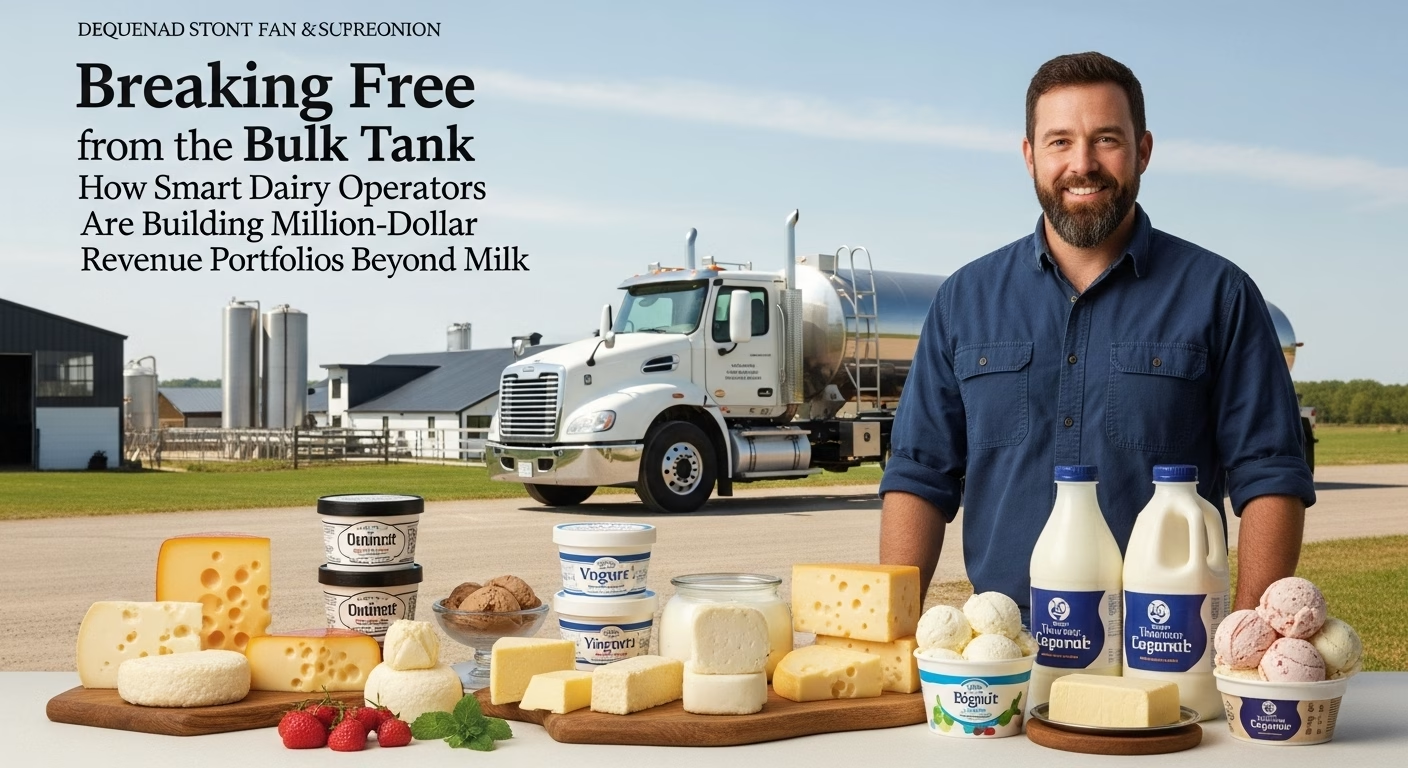
The American dairy industry’s survival depends on one critical pivot: transforming from commodity-dependent operations into diversified revenue powerhouses. While 75% of producers expect profitability in 2025, the winners won’t be those producing the most milk—they’ll be the entrepreneurs building integrated business systems that generate wealth regardless of volatile milk prices.
What if the entire foundation of modern dairy economics is built on a dangerous myth that’s bankrupting hardworking farm families across America?
You’ve spent decades perfecting your Total Performance Index (TPI) scores, optimizing dry matter intake (DMI) to push milk yield beyond 85 pounds per cow per day, and monitoring somatic cell counts (SCC) like your livelihood depends on it—because it does. Your transition period management rivals textbook perfection, your genomic testing program generates Expected Breeding Values (EBVs) that would make geneticists proud, and your precision agriculture systems collect more data than most Fortune 500 companies.
Yet you’re still struggling to maintain positive cash flow because you’re betting your entire operation on a single, brutally volatile commodity in an industry where milk price volatility has reached unprecedented levels.
Here’s the uncomfortable truth that’s keeping progressive operators awake at night: if you’re still running a traditional milk-only business model in 2025, you’re not managing a dairy—you’re gambling with generational wealth in a rigged casino where volatile commodity markets hold all the cards.
The producers who are not just surviving but building sustainable wealth have cracked a code that challenges everything the industry establishment preaches. The future isn’t about producing more milk per cow—it’s about building integrated profit systems where milk becomes just one revenue stream in a diversified portfolio that generates cash from multiple directions, insulating operations from the devastating price swings that have destroyed thousands of family farms.
This transformation is already happening, and the numbers from industry leaders are staggering.
The $780 Billion Reality Check: Why Traditional Models Are Systematically Failing
While the North American dairy industry continues to power economic growth with a massive footprint supporting over 3 million jobs and generating nearly $780 billion in total economic impact, individual operators face a brutal paradox. The industry thrives while farm-level margins get systematically crushed by structural forces that show no signs of reversing.
Think of it like running a genetic evaluation program where your EBVs for milk production keep climbing, but your actual profit per cow keeps declining. The fundamental economics don’t add up anymore, and pretending they do is financial suicide.
The Production Paradox That’s Destroying Profitability
Here’s the sobering reality that industry cheerleaders don’t want you to see: According to recent industry data, approximately three-quarters of dairy farmers expect to be profitable in 2025, representing a significant shift from 2024. However, this optimism is built on diversification strategies rather than improved milk prices alone.
USDA forecasts show the all-milk price for 2025 increased by just 50 cents to $23.05 per hundredweight—a modest improvement that barely keeps pace with escalating input costs. The USDA expects reduced milk production per cow to help balance supplies with good demand, but this structural constraint highlights the industry’s limited ability to respond to price signals.
Why This Matters for Your Operation: If you’re milking 1,000 cows and achieving the USDA-projected milk price of $23.05/cwt, you’re generating $2.3 million in gross revenue—before accounting for feed costs that can consume 50-60% of production expenses, labor shortages driving wages higher, and the inevitable market crisis that wipes out six months of margins overnight.
The Consolidation Crisis: Why “Get Big or Get Out” Is a Dangerous Myth
Here’s where we need to demolish some sacred cows in dairy management thinking.
The industry establishment continues pushing the “get big or get out” narrative despite mounting evidence that this approach creates a dangerous concentration of risk and systematically destroys the middle-class farming structure that built America’s agricultural strength.
The evidence is stark: technology is fueling consolidation as big global farms get bigger, creating an investment treadmill that forces continuous capital deployment just to maintain a competitive position. The result? A hollowing out of the middle class of dairy farming that threatens the industry’s foundation.
The Four-Pillar Wealth-Building Framework: Beyond Commodity Dependence
The operations building real wealth have moved beyond the traditional production mindset. They’ve implemented what industry insiders call the “Integrated Revenue Architecture”—four proven profit centers working synergistically to create more resilient businesses than their commodity-focused competitors.
Pillar One: Beef-on-Dairy—The Strategic Cash Flow Foundation
This isn’t random crossbreeding—it’s precision herd segmentation using genomic testing to create a two-tier genetic strategy that maximizes the value of every pregnancy in your herd.
The Strategic Framework That’s Working
Your elite females (top 30% genomic merit) get bred with sexed dairy semen to produce the next generation of replacements. Your lower-genetic-merit cows (bottom 40%) get strategically bred to proven beef sires selected specifically for calving ease and beef-on-dairy performance.
Verified Financial Impact from Industry Data
The numbers are compelling and represent a fundamental shift in industry practices. According to the National Association of Animal Breeders, 7.9 million units of beef semen were sold to dairy farmers in 2024, trailing only the top category of sex-sorted dairy semen, which sold 9.9 million units. This marks back-to-back years that U.S. dairy farmers purchased a record number of beef semen units.
The beef-on-dairy semen sales increased by about 317,000 units both in the U.S. and for export in 2024, demonstrating the rapid adoption of this strategy. With roughly 20% of the beef supply now originating from the U.S. dairy herd and the lowest U.S. beef cattle numbers since 1951, this percentage continues climbing.
Implementation Strategy and Financial Impact:
- Initial investment: $50-75 per pregnancy (premium beef semen cost)
- Payback period: Immediate (birth to 7 days)
- Annual revenue potential: $300-500 per eligible cow
- Operational complexity: Low (builds on existing breeding program)
Why This Strategy Is Reshaping the Industry: The widespread adoption is fundamentally altering supply dynamics. U.S. dairy-bred fed slaughter has grown to be more than 4 million head annually, and over half are beef-on-dairy, according to CattleFax. This shift creates a more genetically elite but smaller future dairy herd while providing crucial cash flow for current operations.
Pillar Two: Value-Added Processing—The High-Stakes Transformation
Let’s address the elephant in the processing room: most value-added ventures fail because farmers underestimate the complete business transformation required.
Research consistently shows that while value-added processing offers the highest potential margins, it also carries the highest risk. The capital requirements are substantial, regulatory compliance is complex, and the shift from agricultural producer to consumer packaged goods manufacturer represents a fundamental business transformation.
Capital Reality Check:
- Small artisanal operation: $52,000-135,000
- Mid-scale commercial facility: $200,000-500,000
- Large-scale processing partnership: $2-10 million
The large-scale success model—operations building multi-million-dollar processing partnerships—works because it shifts the business model from commodity price-taking to cost-plus manufacturing contracts that insulate operations from milk price volatility.
Pillar Three: Agritourism—The Brand-Building Revenue Stream
Market Reality Check
According to industry research, agritourism revenue grows as farms diversify income streams. Success correlates directly with visitor volume and geographic location, with operations within 50 miles of metropolitan areas showing significantly higher revenue potential.
Implementation Models by Scale:
- Small Operations (1,000 cows): All strategies become viable. Consider high-capital ventures like anaerobic digesters and processing partnerships. Prime candidates for corporate insetting programs.
The Flywheel Effect: Creating Synergistic Revenue Streams
The most sophisticated operations create synergistic revenue streams where each element amplifies the others. The consistent cash flow from beef-on-dairy provides seed capital for a small creamery. The creamery’s products become the centerpiece of an agritourism venture with an on-farm store. Meanwhile, the manure from the core herd can feed a digester, generating carbon credits and renewable energy.
The Bottom Line: Your Strategic Framework for 2025 and Beyond
Remember that provocative question we started with? What if the entire foundation of modern dairy economics is built on a dangerous myth that’s bankrupting hardworking farm families?
The evidence is overwhelming, and the time for incremental changes has passed. The North American dairy industry will continue generating massive economic value, but the operators who capture that value won’t be the ones producing the most milk—they’ll be the ones building the most resilient, diversified revenue systems.
The industry data confirms this shift: approximately three-quarters of dairy farmers expect to be profitable in 2025, but this optimism isn’t built on wishful thinking about milk prices—it’s grounded in strategic diversification that creates sustainable competitive advantages independent of commodity market volatility.
The operations implementing these integrated strategies aren’t just surviving current market conditions—they’re positioning themselves to profit regardless of where milk prices go. While commodity-focused farms continue riding the price roller coaster, diversified operations build sustainable wealth across multiple revenue streams.
Your Immediate Implementation Strategy
Don’t wait for perfect market conditions or complete certainty. The operations winning this transformation started with the same challenges and uncertainties you face today.
Week 1-2: Diversification Audit
- Calculate your beef-on-dairy potential by genomic testing your entire herd and identifying the bottom 40% genetic merit cows
- Assess your location’s agritourism viability within a 50-mile radius of population centers
- Evaluate regional processing opportunities and cooperative partnerships
Month 1: Foundation Building
- Implement a strategic beef-on-dairy program using genomic segmentation
- Begin regulatory research for agritourism licensing if geographically viable
- Analyze cash flow improvements from immediate beef-on-dairy implementation
Months 2-6: Strategic Development
- Use beef-on-dairy cash flow to fund initial agritourism infrastructure
- Explore processing partnerships or regional cooperative opportunities
- Develop long-term capital plan for higher-investment strategies
Year 1-2: Advanced Integration
- Evaluate carbon market participation through insetting programs like Athian’s marketplace
- Implement flywheel strategies connecting multiple revenue streams
- Assess technology investments that enable rather than consume diversification capital
The future of profitable dairying isn’t about perfecting your production metrics—it’s about building an integrated business system that generates wealth from multiple sources while milk provides the stable foundation for expansion.
The milk price volatility will continue. Economic pressures will intensify. Industry consolidation will accelerate. The only question is whether you’ll be riding these forces or building a business that profits regardless of their direction.
The choice is stark: evolve your business model now or watch your margins evaporate year after year while more strategic competitors build sustainable wealth.
The revolution is already underway. The only question is whether you’ll lead it or be left behind by it.
Learn More:
- BEEF-ON-DAIRY REVOLUTION: Former Dairy Farmers Finding Gold in the Beef Market Corporate Giants Overlooked – Practical implementation guide for transitioning dairy operations to beef-on-dairy systems, including genomic testing strategies, processing partnerships, and direct marketing networks that can generate immediate cash flow while corporate giants miss the opportunity.
- 2025 Dairy Market Reality Check: Why Everything You Think You Know About This Year’s Outlook Is Wrong – Strategic market analysis revealing how component optimization and processor relationships create competitive advantages worth $1.90/cwt premiums, while exposing policy risks that could reshape profitability overnight for forward-thinking operations.
- Dairy’s Bold New Frontier: How Forward-Thinking Producers Are Redefining the Industry – Demonstrates how 80% of successful operations now earn revenue beyond milk sales through integrated technology adoption, sustainability programs, and diversification strategies that deliver measurable ROI within months of implementation.
 The Sunday Read Dairy Professionals Don’t Skip.
 The Sunday Read Dairy Professionals Don’t Skip.
Every week, thousands of producers, breeders, and industry insiders open Bullvine Weekly for genetics insights, market shifts, and profit strategies they won’t find anywhere else. One email. Five minutes. Smarter decisions all week.




