






Brazil’s dairy farmers are milking a price surge, but is the cream about to curdle? The industry’s riding high with spot prices hitting R$ 3.17/liter. But as UHT demand soars and imports cool, experts warn of challenges ahead. Dive into the complex world of Brazilian dairy – where opportunity and uncertainty flow like milk and honey.
Summary
Brazil’s dairy industry is experiencing a significant upturn, with milk prices reaching R$ 3.17 per liter in late February 2025, a R$ 0.20 increase from the previous fortnight. This surge, driven by reduced supply due to seasonal factors, weather challenges, and strong demand for UHT milk, has boosted farmer profitability. However, the sustainability of these high prices is questionable, with experts warning of potential market corrections. The unique prominence of UHT milk in Brazil, valued at over USD 3 billion in 2022, plays a crucial role in shaping market dynamics. While the current situation benefits domestic producers and may curb imports, concerns loom about consumer reactions to high prices and potential demand destruction. As the industry navigates this complex landscape, adaptability will be key for farmers to capitalize on current gains while preparing for future challenges.
Key Takeaways
- Milk prices in Brazil have surged to R$ 3.17 per liter in late February 2025, up R$ 0.20 from the previous fortnight.
- The price increase is driven by reduced supply (due to seasonal factors and weather issues) and strong demand, especially for UHT milk.
- Current high prices are boosting dairy farmer profitability, with stable production costs enhancing margins.
- UHT milk plays a crucial role in Brazil’s dairy market, valued at over USD 3 billion in 2022.
- The price surge may reduce Brazil’s reliance on dairy imports, benefiting domestic producers.
- Experts warn of potential challenges ahead, including possible market corrections and consumer resistance to high prices.
- Dairy product inflation (10.24%) is outpacing overall inflation (4.87%), raising concerns about long-term demand sustainability.
- The industry faces a delicate balance between capitalizing on current high prices and preparing for future market shifts.
- Adaptability and efficiency improvements will be crucial for dairy farmers to navigate the evolving market landscape.
- Regional variations in production and weather impacts highlight the complexity of Brazil’s dairy industry.
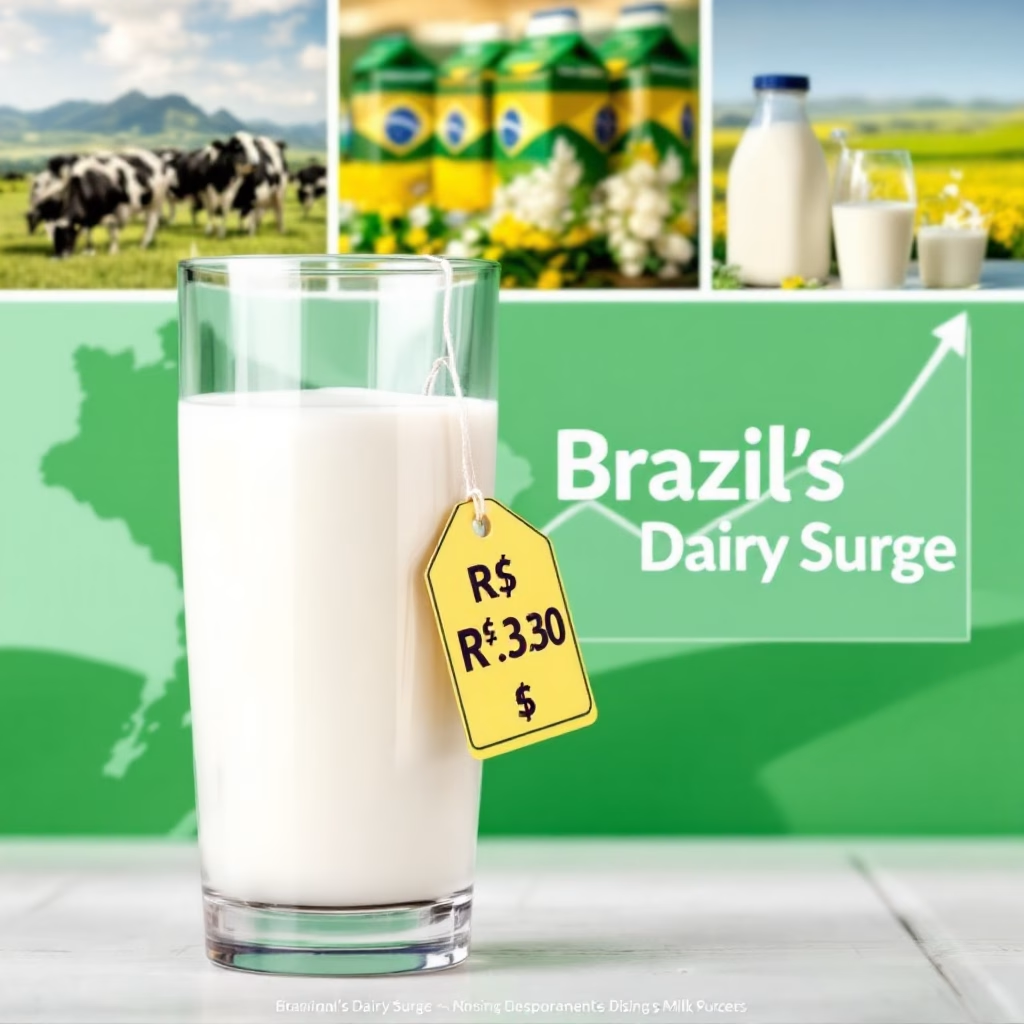
Brazil’s dairy industry is riding a wave of rising milk prices, with spot prices reaching R$ 3.17 per liter (US$ 0.55) in late February 2025, marking a significant R$ 0.20 increase from the previous fortnight’s average of R$ 2.97. This surge is primarily driven by reduced supply and increased demand, particularly for UHT (Ultra-High Temperature) milk. While this news has dairy farmers grinning from ear to ear, it’s also raising eyebrows about the long-term sustainability of these price levels.
The Perfect Storm: Supply Squeeze Meets Demand Surge
The current price hike isn’t just a flash in the milk pail. It’s the result of a perfect storm of factors brewing for months. On the supply side, we’re seeing a seasonal decrease in milk production, which is typical for this time of year. But there’s more to it than just the usual ebb and flow.
Weather issues have played a significant role. The Southeast and Central-West regions have experienced off-season production declines, while unfavorable conditions in the South have delayed regular production schedules. These challenges have contributed to a consistent decline in production throughout 2024 and into 2025.
Demand for UHT milk and other dairy derivatives has increased, adding fuel to the fire. This increased appetite for dairy products has created a competitive environment in which buyers are willing to pay premium prices to secure their supply.
A Silver Lining for Dairy Farmers
This upward trend in milk pricing has certainly boosted producer profitability. Brazilian dairy producers are in a good situation, with operating expenses generally stable. Juliana Pilla, an analyst at Scot Consultoria, notes, “Last year was a recovery period for dairy farmers, with prices rising almost every month while production costs stayed flat.”
Improved margins provide much-needed respite to farmers who have encountered several obstacles recently. With better prices maintaining profitability, farmers may reinvest in their businesses, potentially leading to increased milk output for the rest of this year.
The UHT Factor
One can’t talk about Brazil’s dairy industry without mentioning UHT milk. Unlike in countries like the United States, where UHT milk is a niche product, it’s a staple in Brazilian households. The Brazil UHT Milk market was valued at over USD 3 billion in 2022, and its influence on overall milk prices is significant.
The popularity of UHT milk in Brazil stems from practical considerations related to the country’s climate and infrastructure. It offers convenience and extended shelf life compared to traditional pasteurized milk, making it particularly appealing to urban consumers with hectic lifestyles.
Global Ripples in the Milk Pond
Brazil’s dairy market doesn’t exist in isolation. The country’s growing dependence on dairy imports has been making waves in global markets. However, recent trends suggest this import boom might be cooling off.
Valter Galan, a partner at MilkPoint, explains: “For the domestic industry, this is very favorable because imported products have been entering Brazil in significant volumes. Prices in Uruguay and Argentina have increased and are closer to those in Brazil. Alongside a higher exchange rate, this will likely reduce imports”.
Challenges on the Horizon
While the current high prices are certainly cause for celebration among dairy farmers, there’s a hint of caution in the air. Industry experts are already warning about potential challenges ahead.
Darlan Palharini, executive secretary of the Rio Grande do Sul Dairy Industry Union (Sindilat-RS), suggests that prices have likely peaked, given the difficulty of passing on costs to consumers. “Brazilian producers are earning nearly as much as their European counterparts, so there’s limited room for further price increases at the producer level. The focus now must be on improving efficiency,” he says.
Moreover, there’s concern about how consumers will react to sustained high prices. The IPCA (Extended Consumer Price Index) showed that inflation for dairy products reached 10.24% in the 12 months to November 2024, with UHT milk prices soaring by 20.38%. This level of inflation, significantly outpacing the overall inflation rate, could lead to demand destruction if consumers start to balk at higher prices.
The Bottom Line
As we approach 2025, Brazil’s dairy industry is at a crossroads. The current high prices are providing a much-needed boost to farmers’ bottom lines, but the sustainability of these price levels remains uncertain. Weather patterns, global market dynamics, and consumer behavior will all play crucial roles in shaping the industry’s future.
For now, dairy farmers would do well to enjoy the cream while it lasts but also prepare for potential market corrections down the line. As always in agriculture, adaptability and foresight will be key to navigating the ever-changing landscape of the dairy industry. How will you respond to these shifting market conditions? The future of dairy farming in Brazil will depend on your ability to adapt to these changing challenges and opportunities.
Brazil’s dairy industry is experiencing a significant upturn, with milk prices reaching R$ 3.17 per liter in late February 2025, a R$ 0.20 increase from the previous fortnight. This surge, driven by reduced supply due to seasonal factors, weather challenges, and strong demand for UHT milk, has boosted farmer profitability. However, the sustainability of these high prices is questionable, with experts warning of potential market corrections. The unique prominence of UHT milk in Brazil, valued at over USD 3 billion in 2022, plays a crucial role in shaping market dynamics. While the current situation benefits domestic producers and may curb imports, concerns loom about consumer reactions to high prices and potential demand destruction. As the industry navigates this complex landscape, adaptability will be key for farmers to capitalize on current gains while preparing for future challenges.
Learn more
- Milk Markets Surge Higher on Late Week Buying: Class III, IV Gain Momentum
- Global Dairy Market in 2025: Production Shifts, Demand Fluctuations, and Trade Dynamics
- Dairy Trends for 2025: High-Protein and Lactose-Free Growth
 Join the Revolution!
 Join the Revolution!
Bullvine Daily is your essential e-zine for staying ahead in the dairy industry. With over 30,000 subscribers, we bring you the week’s top news, helping you manage tasks efficiently. Stay informed about milk production, tech adoption, and more, so you can concentrate on your dairy operations.




