







Not all hooves are equal: Study reveals first-lactation cows benefit dramatically from enhanced modeling, while older cows show little difference.
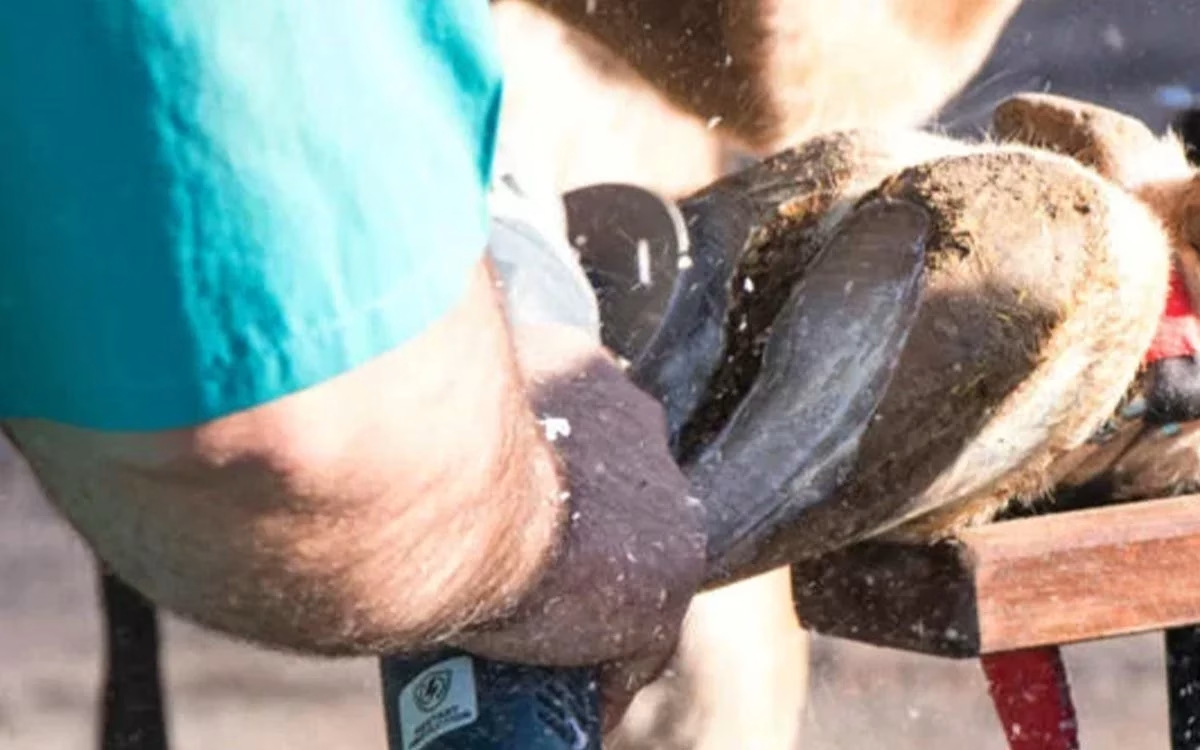
If you’re still trimming every cow in your herd the same way, you’re leaving money on the table and causing unnecessary suffering in your first-lactation animals. That’s not just my opinion – it’s now backed by hard science that challenges everything we thought we knew about preventative hoof care.
A groundbreaking study published in the Journal of Dairy Science (A randomized controlled trial to evaluate the effect of 2 hoof trimming methods at dry-off on hoof lesion and lameness occurrence in dairy cattle) has turned conventional wisdom on its head, revealing that the standard “one-size-fits-all” approach to hoof trimming that’s been gospel for decades is shortchanging your youngest cows and potentially costing you thousands in lost production, treatment costs, and premature culls.
The Lameness Crisis: Bigger Than You Think
Let’s face it – despite all our technological advances in dairy farming, lameness remains one of our industry’s most persistent failures. With herd prevalence ranging from 10% to 55% across North American dairies, we’re discussing a problem affecting virtually every operation.
The financial damage? At least $200-300 per case. But that barely scratches the surface. When you factor in the 15% milk production loss, extended days open, increased culling risk, and labor costs, lameness quickly becomes the third most expensive health issue after mastitis and reproductive failure.
And let’s be honest – we’ve failed to make significant progress on this front for years. While we’ve revolutionized virtually every other aspect of dairy management, many of us are still trimming hooves the same way our grandfathers did.
What the Research Found
The Wisconsin/Minnesota study compared two trimming methods applied at dry-off:
The LIT Method (Little Model): The standard functional trim with moderate modeling – essentially what most trimmers have been doing for decades.
The BIGM Method (Big Model): An adaptation with significantly increased modeling of the weight-bearing hoof, removing more horn under the typical sole ulcer site.
Here’s where things get interesting – and where conventional wisdom gets tossed out the window like yesterday’s silage.
When looking at all 1,556 cows combined, researchers found no significant difference between the two trimming methods. If they’d stopped there, we’d all just keep doing what we’ve always done.
However, the real breakthrough came when they analyzed the data by parity. For first-lactation cows, the BIGM method was dramatically more effective:
- 76% lower odds of developing hoof horn lesions compared to standard trimming
- 6.1% absolute risk reduction in hoof lesions
- Significantly lower risk of becoming lame in the subsequent lactation
Despite these findings, are you still using the same trim on every cow in your herd? Why would you continue treating all hooves the same when science clearly shows the benefits of differentiated approaches?
Why First-Lactation Cows Are Different: The “Bone” Truth
So why does the BIGM method work better, specifically for younger cows? It comes down to what’s happening inside the hoof – specifically with the pedal bone (P3).
Older cows, especially those with previous lameness episodes, often develop bone exostosis – abnormal bony growths on the pedal bone. These changes alter the internal architecture of the hoof and affect how pressure is distributed.
Think of it like this: a young cow’s hoof structure is like a new truck with factory suspension – the pressure points are predictable. An older cow with pedal bone changes is like that same truck after 200,000 miles – the suspension has adapted to years of use and abuse, creating unique wear patterns.
First-lactation cows generally have less of this bone remodeling, so they respond more predictably to the enhanced modeling of the BIGM method. The industry’s failure to recognize this biological difference has cost us dearly.
What This Means for Your Bottom Line
Let’s put some numbers to this. In a 1,000-cow herd with a typical age distribution:
- Approximately 350 cows will be first lactation
- If you’re dry-treating about 80% of your herd annually, about 100 first-lactation cows will be trimmed at dry-off each year
- The study showed a 6.1% absolute risk reduction for hoof lesions in first-lactation cows with the BIGM method
That means implementing BIGM for first-lactation cows would prevent approximately 6 cases of hoof lesions annually. At $300 per case, that’s $1,800 in direct savings.
But the value comes from the reduced lameness risk extending throughout the lactation. When you factor in the hidden costs of subclinical effects on production and fertility, you’re looking at tens of thousands in savings annually.
And what’s the cost to implement? Virtually nothing beyond the time spent communicating with your hoof trimmer about the modified approach.
Ask yourself: What other management change offers this kind of return with zero capital investment?
Challenging the Status Quo: Why Hasn’t This Been Done Before?
If differentiating trimming methods by parity makes this much sense, why haven’t we been doing it all along?
The answer is simple and familiar to anyone in agriculture: tradition. We stick with conventional practices not because they’re optimal but because they’re familiar. Our industry talks endlessly about innovation but often resists change in day-to-day practices.
The standard functional trim was developed when dairy herds were smaller, less intensive, and cows had different genetics. It was designed for a different era of dairy farming. Isn’t it time our hoof care caught up with the rest of our modernized practices?
Taking Action: Your Next Steps
Here’s what you should do Monday morning:
- Pull a list of your first-lactation cows approaching dry-off from your herd management software
- Schedule a meeting with your hoof trimmer to discuss implementing the BIGM method specifically for these animals
- Create a simple tracking system in DairyComp or your record-keeping system to monitor outcomes
- Consider consulting with your veterinarian about integrating this approach into your overall hoof health program
If your trimmer is reluctant to adapt, show them this article or the original research. And if they refuse to try a different approach for your first lactation cows? It might be time to find a new trimmer who stays current with research-backed practices.
Remember, this isn’t about completely overhauling your hoof health program – it’s about making a targeted change for the group with the highest potential return.
The Bottom Line: Adapt or Fall Behind
The evidence is clear: the standard functional trim we’ve used for decades isn’t optimal for all cows. First-lactation animals benefit significantly from the enhanced modeling of the BIGM method.
Here’s the uncomfortable truth: if you’re still using a one-size-fits-all approach to hoof trimming, you’re practicing outdated management that hurts your cows and bottom line.
As the rest of dairy farming continues to evolve toward precision-based approaches, incorporating differentiated hoof-trimming strategies represents a logical next step. Those who adapt quickly stand to gain through improved cow welfare, reduced treatment costs, and enhanced productivity.
The question isn’t whether you can afford to change your approach – it’s whether you can afford not to.
Isn’t it time we stopped accepting lameness as an inevitable cost of dairy farming and started implementing the differentiated strategies that science shows work?
Key Takeaways
- Targeted trimming works: First-lactation cows benefit significantly from the BIGM method (with increased modeling of the weight-bearing claw), with 76% lower odds of hoof lesions compared to standard functional trimming.
- Not all cows respond the same: The study found no advantage of either trimming method for older cows (lactation 2+), suggesting trimming efficacy depends on factors like parity and previous lameness history.
- Bone development matters: The differential effect by parity may be related to accumulated bone changes (exostosis) on the pedal bone in older cows, making them less responsive to specific trimming modifications.
- Preventative approach: The BIGM method should be considered specifically for first-lactation cows at dry-off to reduce lesion and lameness risk during their critical second lactation, potentially improving welfare and productivity.
Executive Summary
A groundbreaking randomized controlled trial involving 1,556 dairy cows across three commercial farms has challenged conventional wisdom about hoof trimming practices. While there was no overall difference between standard functional trimming (LIT) and an adaptation with increased modeling (BIGM) across the entire study population, the research uncovered a critical finding: first-lactation cows trimmed with the BIGM method had 76% lower odds of developing painful hoof horn lesions and significantly lower risk of lameness in their subsequent lactation. The researchers hypothesize this parity-dependent effect may be related to bone development in the hoof, with younger cows having less accumulated pathological changes to the pedal bone. These findings suggest hoof trimming protocols should be tailored based on cow characteristics rather than applying a one-size-fits-all approach, which could substantially improve welfare and productivity for first-lactation animals.
Learn more:
- How Proper Hoof Trimming Can Increase Your Milk Yield
Explores the direct link between optimized hoof care and dairy productivity, including timing strategies for trimming to maximize milk output. - Lameness in Dairy Cattle: Uncovering Why Hoof Health Issues Persist Despite Interventions
Analyzes systemic challenges in lameness prevention, including housing, nutrition, and management factors that interact with trimming protocols. - Lameness in Dairy Cattle: Identifying Risk Factors and Overcoming Barriers to Best Practices
Discusses actionable strategies for addressing parity-specific risks, genetic predispositions, and implementation challenges in hoof health programs.
 Join the Revolution!
 Join the Revolution!
Join over 30,000 successful dairy professionals who rely on Bullvine Weekly for their competitive edge. Delivered directly to your inbox each week, our exclusive industry insights help you make smarter decisions while saving precious hours every week. Never miss critical updates on milk production trends, breakthrough technologies, and profit-boosting strategies that top producers are already implementing. Subscribe now to transform your dairy operation’s efficiency and profitability—your future success is just one click away.




