


Archive for retaliatory tariffs

Breaking: Dairy Caught in Trump’s Tariff Crosshairs as Rollins Teases Trade Deals by Friday

Trump’s 104% tariffs rock dairy exports. Ag Secretary eyes deals by Friday. Survival strategies inside.

EXECUTIVE SUMMARY: President Trump’s sweeping tariffs, including 104% duties on Chinese imports effective immediately, have plunged dairy markets into turmoil, with $8.2B in annual exports at risk. Agriculture Secretary Brooke Rollins hints at potential trade deals by week’s end as 70 nations seek negotiations. Retaliatory measures from Canada and China threaten critical dairy sectors, while Cornell economists project B in losses over four years. Industry leaders urge farmers to lock feed costs, leverage federal programs like Dairy Margin Coverage, and diversify markets. Analysts warn of unprecedented price volatility, but strategic planning could mitigate the blow to producers.

KEY TAKEAWAYS

  • Immediate Tariff Impact: 104% duties on Chinese goods and Canada’s 25% retaliatory tariffs target butter, cream, and infant formula exports.
  • $6B Crisis Looming: Projected losses could erase profits for U.S. dairy through 2029 without intervention.
  • Survival Playbook: Lock feed contracts, enroll in DMC/DRP programs, and pivot milk to domestic markets.
  • Processor Pivot: Major exporters like Darigold and Leprino are shifting production to cushion export losses.
  • Rollins’ Gamble: Potential deals with 70 nations could soften the blow – but farmers must prepare for volatility now.
Trump tariffs, dairy export crisis, retaliatory tariffs, U.S.-China trade war, Dairy Margin Coverage

As the agricultural world reels from President Trump’s sweeping tariff implementation, U.S. Agriculture Secretary Brooke Rollins has offered hope amid escalating trade tensions. Speaking Tuesday, Rollins expressed optimism that new trade agreements could materialize within days, even as significant duties on Chinese imports take effect tonight.

GLOBAL MARKETS RATTLED AS TARIFF WAR ERUPTS
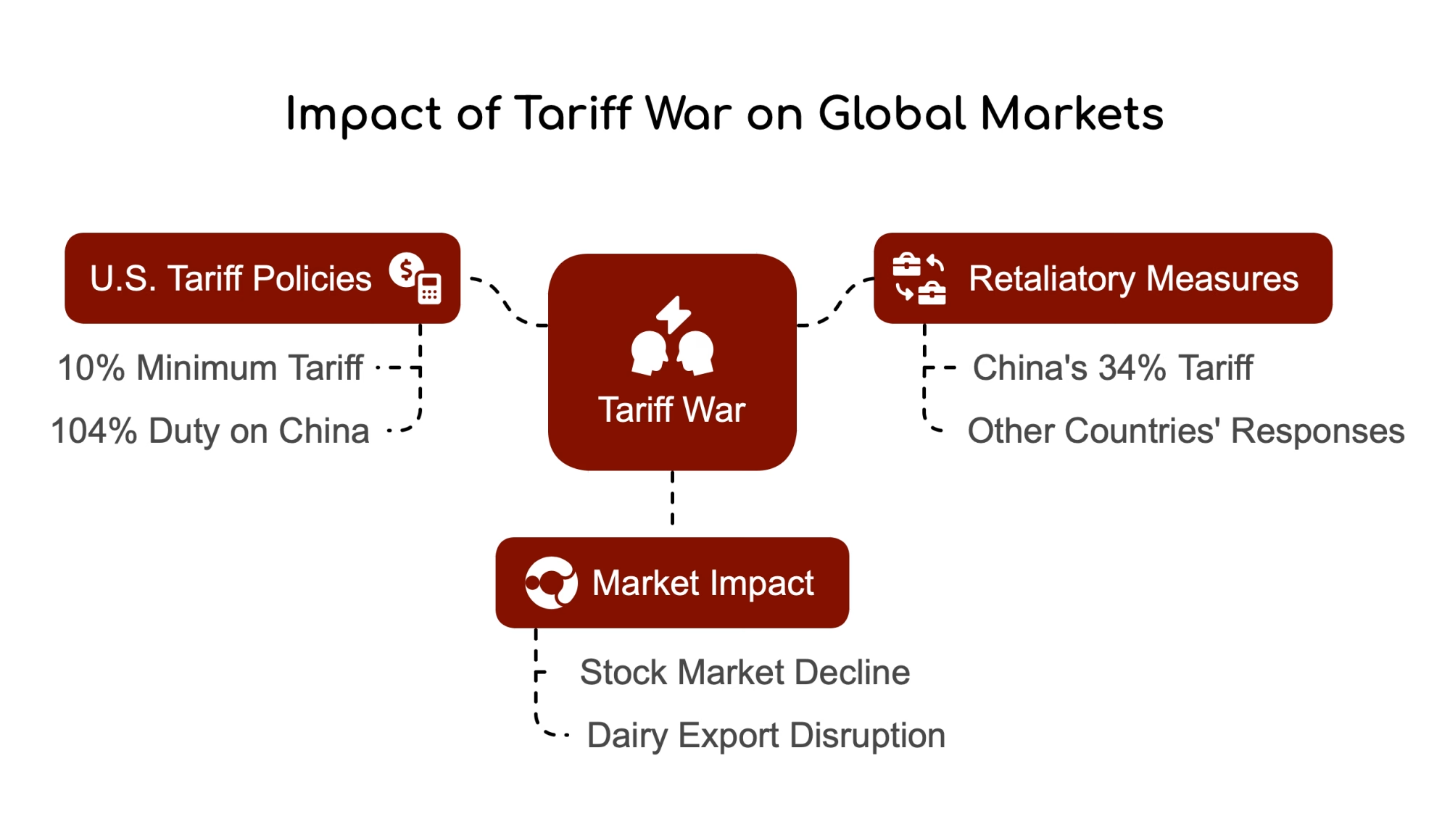
President Trump’s April 2nd announcement implementing “reciprocal” tariffs has triggered market volatility and prompted immediate retaliation from key trading partners. The policy imposes a minimum 10% tariff on all imports, with additional duties reaching as high as 50% for specific countries.

After China announced retaliatory measures, the Trump administration escalated the situation by declaring 104% duties on Chinese imports, set to take effect shortly after midnight tonight. Not to be outdone, China has announced a 34% retaliatory tariff on all U.S. goods effective April 10.

STOCKS PLUNGE AS DAIRY EXPORT CHANNELS FACE EARTHQUAKE
U.S. stocks have dropped for four consecutive trading days since the initial tariff announcement, reflecting widespread economic concern. The picture is particularly troubling for dairy producers as export markets face immediate disruption.

ROLLINS PROMISES “DEALS BY FRIDAY” – CAN SHE DELIVER?

Despite mounting tensions, Secretary Rollins maintains that negotiations are progressing rapidly behind the scenes: “I believe, sincerely, it will be sooner rather than later. We’ll be hearing about new deals that are being struck, perhaps by the end of the week.”

This optimism comes with a significant revelation – 70 countries have already initiated discussions with the United States to negotiate exemptions or modifications to the tariff structure potentially.

BILLION-DOLLAR BAILOUT BACK ON THE TABLE
Critically for dairy producers, Rollins has indicated the Trump administration is preparing another round of market disruption payments if tariffs result in a downturn of agricultural exports. During Trump’s first term, the USDA provided farmers approximately $16 billion in trade assistance, with dairy receiving $2.9 billion in direct payments.

$8.2 BILLION IN DAIRY EXPORTS NOW AT RISK

The U.S. exported $8.22 billion of dairy products in 2024 alone, with Mexico, Canada, and China serving as the top destinations in dollar terms. These three markets – all targets of Trump’s tariff plan – collectively represent over half of U.S. dairy exports by value annually.

CountryExport Value (2024)Key Products Affected
Mexico$2.47 billionCheese, SMP, Whey
Canada$1.14 billionButter, Cream
China$584 millionInfant Formula, Whey
Japan$394.6 millionCheese, Lactose

THE BRUTAL NUMBERS DAIRY PRODUCERS MUST FACE:

  • China (third largest export market): $584 million in U.S. dairy imports (2024)
  • 26 specific dairy products are now subject to 10% Chinese tariffs, with feed whey exempted
  • Historical context: 2019-2021 China tariffs cost U.S. dairy $2.6 billion in lost revenue
  • Projected damage: Cornell’s Charles Nicholson forecasts $6 billion in lost dairy profits over four years

Canada has already implemented 25% retaliatory tariffs on key dairy products, including milk, cream, and butter – critical export categories directly impacting U.S. producer margins.

INDUSTRY HEAVYWEIGHTS SQUARE OFF ON TARIFF STRATEGY

The agricultural community has expressed various responses to the tariff implementation, ranging from cautious support to outright alarm.

American Farm Bureau Federation President Zippy Duvall didn’t mince words: “Tariffs will drive up the cost of critical supplies, and retaliatory tariffs will make American-grown products more expensive globally.” He emphasized that more than 20% of farm income comes from exports.

National Milk Producers Federation President Gregg Doud took a more nuanced approach: “Tariffs can be a useful tool for negotiating fairer terms of trade. To that end, we are glad to see the administration focusing on long-time barriers to trade that the European Union and India have imposed on our exports.”

U.S. Dairy Export Council President Krysta Harden similarly called for a focus on eliminating tariff and non-tariff barriers, particularly with the European Union and India.

MARKET ANALYST WARNS: “BRACE FOR PRICE WHIPLASH”

Mike North, president of Ever.Ag a sober assessment: “Predictably, this will add volatility to demand that may overshadow the ongoing focus around supply. Only small changes can have large impacts on price. Producers are well advised to brace for the disruption that these tariffs will likely create.”

Metric2019-2021 China Tariffs2025 Projected Losses
U.S. Dairy Revenue-$2.6B-$6B (4-year estimate)
Milk Price Impact-$1.20/cwt-$2.80/cwt (projected)
Jobs at Risk4,20016,500

With Canada implementing 25% tariffs on cream and butter, North notes these measures could significantly affect U.S. dairy prices, as Canada represents a significant export destination.

LESSONS FROM THE 2018-2021 TRADE WAR
“We’ve been here before, and the operations that survived did three things right,” explains Wisconsin dairy farmer John Vosters, who weathered the previous tariff storm. “First, they locked in feed costs early. Second, they maximized federal risk management programs. And third, they diversified their processor relationships beyond those heavily dependent on exports.”

SURVIVAL TOOLKIT: 7 CRUCIAL STEPS FOR DAIRY PRODUCERS

FINANCIAL ARMOR:

  • Lock in feed contracts before potential retaliatory grain tariffs drive costs higher
  • Review Dairy Margin Coverage (DMC) and Dairy Revenue Protection (DRP) options immediately
  • Calculate potential 10-15% revenue impacts from top export markets

MARKET OFFENSE:

  • Identify alternative domestic outlets for milk that would typically enter export channels
  • Maintain close contact with processors about their export contract contingency plans
  • Consider component adjustment strategies (shifting butterfat/protein ratios based on market signals) if butterfat export values decline dramatically
  • Evaluate on-farm processing opportunities to capture domestic value-add potential

RISK MANAGEMENT PROGRAM DEADLINES: The 2025 enrollment period for Dairy Margin Coverage (DMC) runs from January 29 to March 31, 2025. DMC offers coverage levels ranging from $4.00 to $9.50 per hundredweight (cwt) of milk in $0.50 increments. The program provides financial protection when the margin between milk price and feed costs falls below selected coverage levels.

The Dairy Revenue Protection (DRP) program, available year-round, ensures against unexpected declines in quarterly revenue from milk sales. Producers can select coverage levels between 80% and 95% of expected revenue and choose either class or component pricing options.

ROLLINS’ GRAND VISION: BEYOND THE TARIFF BATTLE

Beyond the immediate tariff situation, Rollins has articulated an ambitious agenda to transform U.S. agricultural trade. Upon taking office, she pledged to slash the agricultural trade deficit and boost American exports across all sectors.

Her approach includes leveraging existing trade agreements like USMCA while aggressively pursuing new deals to expand market access for U.S. dairy products. “Our goal is to make ‘Made in America’ the gold standard for dairy products worldwide,” she declared.

MetricPre-USMCA (2019)Post-USMCA (2024)Change
U.S. Export Value to Canada$442M$1.14B+158%
TRQ Enforcement (Tariff-Rate Quota access)LimitedUSMCA Panel VictoryImproved
Canadian Market AccessRestrictedExpanded but ChallengedOngoing

The USMCA, signed into law in January 2020, has already shown significant benefits despite implementation challenges. The U.S. prevailed in a dispute settlement panel under USMCA when Canada was found to be breaching commitments by reserving dairy tariff-rate quotas (TRQs) for Canadian processors.

COUNTDOWN TO EXEMPTIONS: WHO’S FIRST IN LINE?
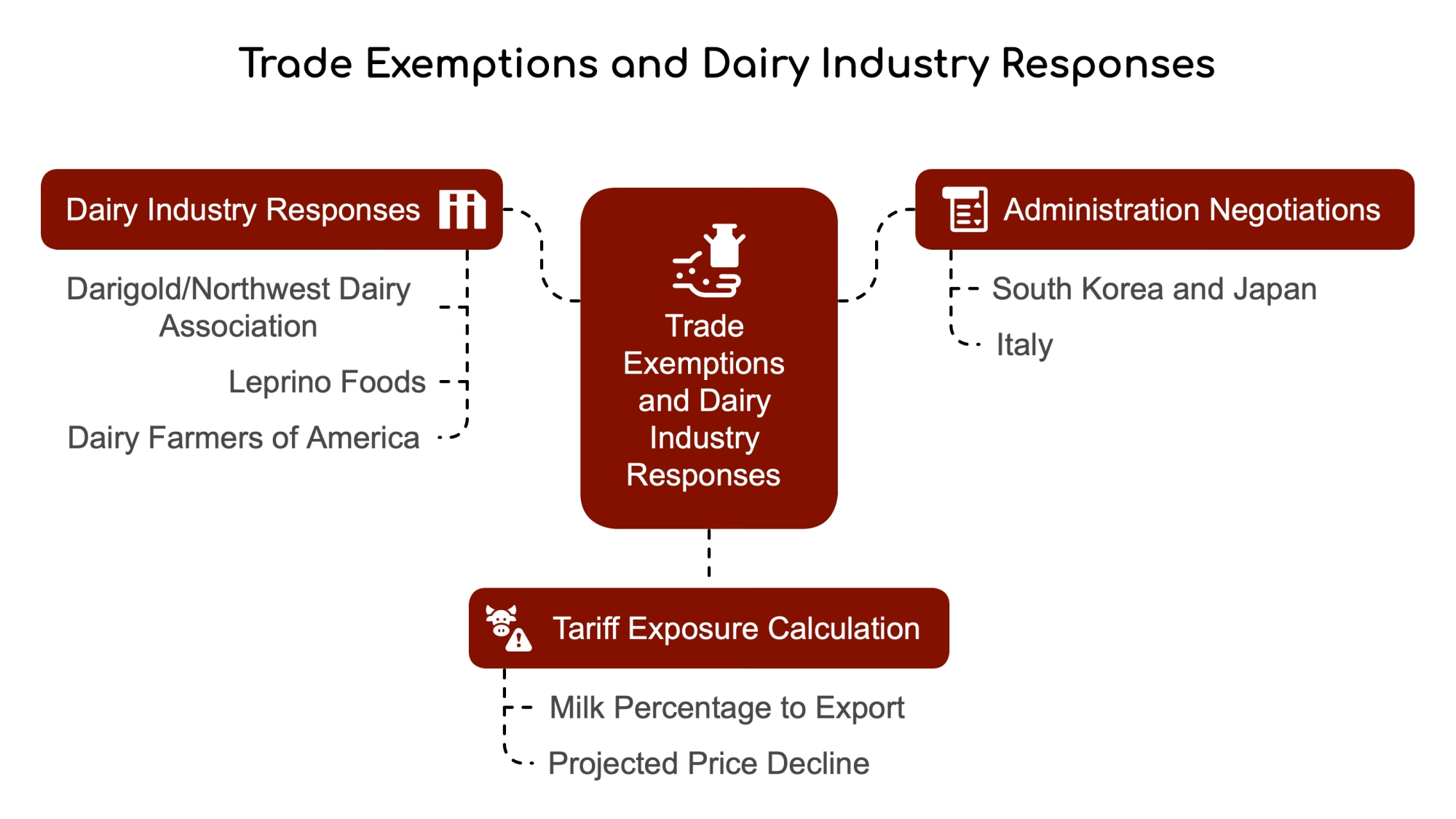
The administration has already scheduled talks with South Korea and Japan, two major trading partners. Italian Prime Minister Giorgia Meloni is due to visit next week. These discussions represent the first wave of negotiations that could potentially lead to exemptions or modifications to the tariff structure.

Secretary Rollins frames the current situation as temporary pain for long-term gain, asserting that the comprehensive approach addresses not just tariffs but also unfair trade practices and unjust trade barriers.

PROCESSOR WATCHLIST: HOW MAJOR EXPORTERS ARE RESPONDING

  • Darigold/Northwest Dairy Association: Accelerating domestic market development while maintaining Asian export commitments
  • Leprino Foods: Repositioning some cheese production from export to domestic food service markets
  • Dairy Farmers of America: Reportedly developing contingency plans for redirecting milk supply from export-focused plants

CALCULATING YOUR FARM’S TARIFF EXPOSURE
Use this simple formula to estimate your operation’s risk:

  1. Determine your milk percentage going to export markets (ask your processor)
  2. Multiply by projected price decline ($2.80/cwt in worst-case scenario)
  3. Result = potential revenue impact per cwt

THE BULLVINE BOTTOM LINE: The tariff situation represents a critical moment requiring strategic navigation. Secretary Rollins’ optimism about imminent deals provides hope to prepare for increased volatility and potentially extended market disruption. Those who position strategically now – both defensively and opportunistically – will be best positioned to weather this trade storm.

THE BULLVINE VERDICT: This high-stakes trade reshuffling demands daily monitoring and nimble management. We’ll continue tracking developments, processor reactions, and market opportunities as they emerge. Buckle up – this ride just got a whole lot bumpier.

Learn more:

Join the Revolution!

Join over 30,000 successful dairy professionals who rely on Bullvine Daily for their competitive edge. Delivered directly to your inbox each week, our exclusive industry insights help you make smarter decisions while saving precious hours every week. Never miss critical updates on milk production trends, breakthrough technologies, and profit-boosting strategies that top producers are already implementing. Subscribe now to transform your dairy operation’s efficiency and profitability—your future success is just one click away.

NewsSubscribe
First
Last
Consent

DAIRY IN THE CROSSHAIRS: How Trump’s Tariffs Threaten Your Herd’s Bottom Line

Trump’s tariffs threaten $16.6B dairy exports. Can farmers adapt? Survival strategies inside.

EXECUTIVE SUMMARY: President Trump’s tariffs have ignited a global trade war with dire consequences for the U.S. dairy industry, risking .6B in farm revenue and triggering retaliatory measures from key markets like China and Canada. Mid-sized farms could lose up to $56K annually, while organic producers face soaring feed costs. Industry leaders remain divided, with some advocating for tariffs as leverage against trade barriers, while farmers scramble to secure contracts and diversify exports. The article outlines actionable survival strategies, including USDA programs and feed efficiency investments, as the sector balances uncertainty with cautious optimism for long-term trade reforms.

KEY TAKEAWAYS:

  • $16.6B at Risk: Retaliatory tariffs threaten nearly a quarter of U.S. dairy exports, with Mexico and China as top vulnerable markets.
  • Farm-Level Crisis: Medium-sized operations face income drops up to $56K/year; organic feed costs may spike $1,200/month.
  • Survival Playbook: Lock pre-tariff contracts, leverage USDA programs, and target emerging Southeast Asian markets.
  • Industry Divide: Leaders split on tariffs as tools for trade reform vs. immediate economic harm to farmers.
  • Long Game: Strategic adaptations like feed-efficient breeds and policy engagement could determine sector resilience.
Trump dairy tariffs, U.S. dairy exports, retaliatory tariffs, dairy survival strategies, global trade war

The U.S. dairy industry faces unprecedented challenges as President Trump’s sweeping tariff policies take effect, threatening .2 billion in annual exports and reshaping the global trade landscape. With retaliatory measures from key trading partners looming, dairy farmers and processors must navigate market volatility, rising input costs, and potential long-term disruptions to established export channels.

Tariff Tensions Spark Global Dairy Trade War

President Trump’s announcement of a baseline 10% tariff on all imports, with higher targeted rates for specific countries, has sent shockwaves through the dairy sector. China and Canada, two of America’s top dairy export destinations, have already imposed retaliatory tariffs. China has placed 10% of its duties on some milk products, while Canada’s package includes 25% tariffs on American cheese, butter, and dairy spreads.

The timing couldn’t be more precarious for U.S. dairy, with Mexico, China, and Canada among its top export markets:

Top U.S. Dairy Export Markets (2024)Volume (Metric Tons)% of Total ExportsValue (USD Millions)
Mexico576,00024.8%$1,840
Southeast Asia395,00017.0%$1,320
China311,00013.4%$970
Canada246,00010.6%$810
Middle East/North Africa172,0007.4%$580

Dairy Industry Voices: Mixed Reactions to Tariff Strategy

While some industry leaders see potential leverage in the tariffs, others warn of devastating consequences. Gregg Doud, President and CEO of the National Milk Producers Federation, cautiously supports the measures:

“Tariffs can be a useful tool for negotiating fairer terms of trade. To that end, we are glad to see the administration focusing on long-time barriers to trade that the European Union and India have imposed on our exports.”

However, farmers on the ground are already feeling the squeeze. AJ Wormuth, who manages 3,600 dairy cows at Half Full Dairy in upstate New York, reports:

“We’re facing a double challenge — lower prices and increasing costs. We can’t simply raise our prices at the market because all our expenses are increasing, leaving us in a difficult position.”

Economic Impact: From Farm to Market

The tariffs are expected to have severe economic consequences:

  • Potential farm-gate revenue losses of up to $16.6 billion due to trade tensions.
  • A medium-sized farm in Wisconsin with about 250 cattle could decrease income by up to $56,000 per year.
  • For organic dairy farmers, grain expenses could increase by $1,200 monthly due to tariffs on Canadian imports.

CME dairy futures have already reacted, with milk futures down 12% since February. The USDA has lowered its 2025 milk production forecast to 227.2 billion pounds, down 0.8 billion from previous estimates.

Dairy Survival Checklist: Strategies for Weathering the Storm

  1. Secure pre-tariff contracts where possible to lock in more favorable terms.
  2. Leverage USDA Dairy Margin Coverage programs to protect against price volatility.
  3. Explore emerging markets in Southeast Asia to diversify export destinations.
  4. Conduct a thorough audit of feed inputs and export contracts to stress-test 2025 margins.
  5. Consider investing in feed-efficient breeds to mitigate rising input costs.

Looking Ahead: Uncertainty and Opportunity

While the immediate outlook appears challenging, some industry experts see potential benefits. The National Milk Producers Federation and U.S. Dairy Export Council have expressed hope that targeted tariffs could help address longstanding trade barriers, particularly with the EU and Canada.

Krysta Harden, President and CEO of the U.S. Dairy Export Council, states:

“President Trump’s commitment to addressing certain unfair and harmful trade policies that American dairy farmers and manufacturers have long faced in the global marketplace can yield positive results if the tariffs announced today are used as leverage to remedy the various trade barriers facing our exporters.”

Adaptability and strategic planning will be key as the dairy industry navigates these turbulent waters. Farmers and processors must stay informed, leverage risk management tools, and actively engage with policymakers to ensure their voices are heard in ongoing trade negotiations.

The stakes have never been higher for U.S. dairy. Will these tariffs lead to more equitable global trade or trigger a costly market disruption? Only time will tell, but one thing is sure: American dairy farmers’ resilience and innovation will be tested in the months and years ahead.

Learn more:

Join the Revolution!

Join over 30,000 successful dairy professionals who rely on Bullvine Daily for their competitive edge. Delivered directly to your inbox each week, our exclusive industry insights help you make smarter decisions while saving precious hours every week. Never miss critical updates on milk production trends, breakthrough technologies, and profit-boosting strategies that top producers are already implementing. Subscribe now to transform your dairy operation’s efficiency and profitability—your future success is just one click away.

NewsSubscribe
First
Last
Consent

How the New U.S.-China Trade War Might Hit Dairy Farmers Harder Than Before

How might the U.S.-China trade war affect dairy farmers and global markets? Could it cost billions? Learn more.

Summary:

The potential escalation of a new U.S.-China trade war poses significant threats to American agriculture, especially corn and soybean farmers, who could face billions in production value losses due to increased tariffs. This ripple effect reaches broader rural economies, affecting crop prices and communities dependent on agriculture. The 2018-2019 trade war showcased similar challenges, and any renewed tensions could significantly reduce U.S. agricultural exports, limiting market access for essential commodities like soybeans and corn. Conversely, South American competitors like Brazil and Argentina might benefit by capturing larger global market shares. Given the interconnected nature of global commerce and potential changes in export markets, this complex scenario necessitates strategic resilience from U.S. producers, especially in the dairy sector, to mitigate adverse impacts on dairy output and profitability.

Key Takeaways:

  • The potential U.S.-China trade war poses significant financial risks to U.S. corn and soybean farmers, threatening billions in production value loss.
  • Ripple effects from the trade tensions could hit rural economies, affecting sectors like manufacturing, mining, and transportation.
  • Prices of essential crops like soybeans and corn are projected to fall below baseline forecasts due to increased tariffs.
  • The historical perspective highlights the economic fallout from the previous trade war and the subsequent efforts to stabilize the agricultural sector.
  • If tariffs are reinstated, American farmers face steep barriers, while South American countries like Brazil and Argentina stand to gain from increased exports.
  • The potential tariff scenario could force U.S. agricultural exports to drop significantly, especially soybeans and corn, with China’s market share shifting towards South America.
  • The possibility of another trade conflict underscores the importance of strategic planning and resilience to mitigate future economic hardships in the dairy and broader agricultural sectors.
US-China trade tensions, agriculture industry impact, corn and soybean sectors, dairy output profitability, trade war consequences, 2018-2019 trade war, retaliatory tariffs, Phase I trade agreement, dairy farmers livelihoods, U.S. dairy exports to China.

Imagine hearing about a fresh trade war between the United States and China that harms the corn and soybean sectors and your dairy farm operations. As tensions rise, the ripple effects may cost American farmers billions of dollars, especially those in the dairy sector. Are you ready for the more significant economic earthquakes that might rock the basis of your business? Because global commerce is so interwoven, when significant industries like maize and soybeans suffer a setback, it impacts the price, availability, and cost of critical agricultural inputs and feeds, putting pressure on dairy output and profitability. This scenario demonstrates how trade policies affect local economies, labor markets, and industry stability. Dairy producers must ready themselves for a series of economic risks that might result from renewed trade hostilities between the world’s two biggest economies.

Understanding the Evolution of U.S.-China Trade Relations and Its Impact on Agriculture

Study the trajectory of US-China trade ties to understand the growing possibility of a new trade war. Historical tensions, particularly the 2018–2019 trade war, significantly impacted the American farm sector. During this time, China’s retaliatory tariffs were especially harmful to US farmers who relied on exports. For example, soybean producers suffered considerable losses when China, a leading market, slapped high tariffs.

The tariffs imposed then were part of the Trump administration’s more significant attempts to address the US trade imbalance and intellectual property issues. China retaliated by targeting critical agricultural items, resulting in around $27 billion in lost agricultural exports. This necessitated government involvement via the Commodity Credit Corporation and initiatives like the Market Facilitation Program.

Fast forward to the present, and some of those tariffs remain, although with more liberal terms thanks to exemptions. For example, although raw soybeans are legally subject to a 30.5% tariff, current exemptions decrease it to 3%. Similarly, maize suffers a 26% tax, reduced to 1% within quota amounts. These exemptions resulted from the 2020 Phase I trade agreement, which attempted to reduce the severity of the conflict while promising additional Chinese purchases. However, actual imports did not entirely match expectations, showing a complicated economic relationship marked by gaps in agreements.

Understanding these processes reveals the delicate balance in the US-China agriculture trade. Any escalation, such as removing exemptions, has the potential to significantly change global market shares, mostly favoring South American nations like Brazil and Argentina. As a result, existing trade policies continue to determine the terrain for US agricultural exports significantly.

The Tug of War: Navigating the Risks and Gains in Agriculture Amid Trade Tensions

The probable consequences of a fresh trade war between the United States and China include concern for dairy farmers’ livelihoods. As the economic consequences of a trade war unfold, dairy producers may see a drop in demand for their goods locally and globally.

One crucial element is the prospective change in export markets. China, a significant market for US dairy goods, may react by boosting import duties. This would make US goods less competitive than those from other nations, such as New Zealand or the European Union, which may step in to fill the hole left by American products. This adjustment might result in a sharp drop in US dairy shipments to China, eliminating a once-promising avenue and putting more supply back on the US market.

The trade war may limit consumers’ capacity to buy dairy products, making domestic demand insufficient to compensate for these decreases. If agriculture and allied industries suffer, disposable incomes in impacted rural communities may fall, resulting in lower purchases of premium dairy products.

The implications go beyond the farmers themselves. Dairy-related businesses, such as processing, distribution, and manufacturing equipment, may slump. Financial issues in soybean and maize production, essential components of dairy cow feed, may impact dairy farmers, leading to increased operating costs and reduced profit margins.

This connection underscores how intricate and pervasive the consequences of a trade war are, not only in terms of lost sales but also in the economic heart of the rural and agricultural areas where dairy professionals live.

Trade Tensions and the Dairy Dilemma: Navigating the Impact of U.S.-China Trade War on Agriculture

A possible new trade war between the United States and China presents enormous dangers to the agriculture industry in an increasingly complicated global trade environment. The American Soybean Association and National Corn Growers Association’s economic assessment highlights significant problems ahead. Let’s examine the crucial facts about prospective losses.

The report predicts that U.S. soybean growers may incur a startling loss of $3.6 billion. The yearly output value amounts to $5.9 billion. This reduction is expected to continue, with maize producers in the United States possibly losing $0.9 billion to $1.4 billion annually. These decreases are not limited to critical crops; they affect the rural economy, including agriculture-related sectors.

But how do these stats apply to the dairy sector? Consider the feeding needs. Soybeans and maize are the primary feed components for dairy cattle. A decline in output value might drive up expenses for dairy producers, affecting feed affordability and availability. Dairy farms may face increased financial pressures if prices decrease considerably due to overproduction and market saturation, reducing operational efficiency and milk production.

Furthermore, the research raises the alarming potential of a significant decline in US agricultural exports to China, particularly if trade tensions worsen. Soybean exports might fall by 51.8% each year, while corn exports could decline by 84.3%. For the dairy industry, this might result in a domino effect in which weakened feed supply chains further strain milk production levels and prices.

These discoveries require prompt responses. Like crop farmers, dairy producers must plan to mitigate uncertainties. Exploring alternate feed sources and more robust supply chain procedures may be critical to reducing these external shocks.

South American Surge: How U.S.-China Trade Tensions Redefine Global Agrarian Dynamics and Impact the Dairy Sector 

The unpredictability of US-China trade ties transfers competitive advantages to nations such as Brazil and Argentina. With the proposed scenario of increased tariffs, these South American powerhouses might acquire substantial clout in the global agricultural market. But how does this prospective change impact the dairy industry?

Brazil and Argentina would most likely increase their agricultural production, notably soybeans and maize, to gain a competitive advantage in the global supply chain. As tariff barriers reduce U.S. exports, these countries may fill the void by grabbing market share via lower-cost manufacturing and boosting agricultural capacity. This move would force the United States to reconsider its global agricultural supply chain stance.

The global dairy market might have a significant knock-on impact. The change in agricultural supply chains may impact feed prices, an essential component of dairy production. Cheaper grain shipments from South America might reduce global feed prices, lowering dairy production expenses. However, there is a catch: US dairy producers may not gain equally. With their principal export grains encountering market issues, they may experience more competition in local feed markets, causing changes in domestic cost dynamics.

This trend may not directly translate into decreased dairy costs at the consumer level. Nonetheless, it hampers pricing strategies and profit margins, particularly for US dairy producers. Such developments might impact international trade agreements and discussions, changing the global dairy production and export environment.

Dairy Farmers on the Frontline: Navigating the Trade War’s Fallout

Industry experts warn about the possible effects of an expanding trade war between the United States and China on the American agriculture sector, notably the dairy industry. Professor Joe Janzen, a well-known economist at the Illinois Centre for the Economics of Sustainability, underlines the long-term consequences of such trade conflicts. He says, “A renewed trade war would be negative for U.S. agriculture, especially corn and soybean farms, which are heavily dependent on international trade.”

The possible consequences extend beyond tariffs and economic data. Professor Janzen states, “The knock-on effects of reduced trade can ripple through communities, affecting not just farm incomes but also employment and local economies.” This domino effect is especially relevant to dairy producers, who often depend on cheap feedstock, such as maize and soybeans, to stay competitive.

Industry voices reflect this view, giving insight into the strategic weaknesses exposed by trade battles in agriculture. “We can’t overlook how critical these trade relationships are,” said an unidentified dairy sector official, emphasizing the need for trade stability for long-term agricultural growth.

These observations from Professor Janzen and other industry executives highlight a critical truth for US dairy farmers: navigating an increasingly complicated global market requires resilience and adaptation, particularly in uncertain trade policy.

Lessons Learned: Navigating the Aftermath of the 2018-2019 Trade War in Agriculture 

Reflecting on the 2018-2019 trade war, it is critical to recognize its substantial rippling effects on the agriculture sector. During this time, the United States lost nearly $27 billion in agricultural exports, requiring the government to react with $23 billion in subsidies from the Commodity Credit Corp. under the Market Facilitation Program. This action highlighted American farmers’ vulnerability to global trade volatility despite temporary respite from subsidies. Though dairy farmers were not as directly affected as soybean and maize growers, they learned valuable lessons from the experience.

One central message for dairy farmers is to diversify their export markets. Overreliance on a single, risky partner, such as China, may undermine both stability and progress. Adopting a more significant market approach helps protect against unexpected policy changes and offers a more resilient export portfolio. Fostering stable domestic demand and developing creative product lines that distinguish US dairy may also help strengthen the industry’s basis.

Furthermore, the trade war proved the need for proactive policy and trade talks involvement. Dairy farmers and industry associations may benefit from ongoing lobbying and communication with government officials to shape legislation that protects agricultural interests. As the sector prepares for potential increased conflicts, learning from previous experiences—with an emphasis on adaptive methods, market resilience, and political engagement—will be critical in limiting risks and seizing possibilities.

Navigating the Shifting Trade Winds: Building Resilience in the Dairy Industry 

As the trade winds alter, dairy producers must become proactive participants in the global economic environment. Diversifying markets is a reasonable method to reduce dependence on a single significant trade partner, such as China. Are there any undiscovered markets or places where your items might fill a void? For example, growing economies in Southeast Asia and Africa may provide new prospects for development and stability.

Consider researching alternate trade partners. Countries with increasing dairy demand, such as India and the Middle East, may have less unpredictable trading agreements. Building solid ties in these locations may protect your organization from the unpredictability of more significant geopolitical issues.

Investing in value-added goods also hedges against raw material price fluctuations. Farmers may capitalize on market trends that value quality and sustainability above quantity by creating niche or premium goods such as specialty cheeses or organic dairy products. This method can charge higher pricing while creating a loyal client base that is less sensitive to global trade fluctuations.

Finally, the objective is to increase resilience through a diverse portfolio, stronger global connections, and an inventive approach to product development. How do dairy professionals prepare to withstand the storm of trade tensions?

The Bottom Line

The possible return of a US-China trade war presents enormous challenges to American agriculture, with billions of dollars in losses expected for essential products such as soybeans and maize. This volatile terrain has more profound ramifications, affecting rural economies and associated sectors. As history shows, such trade disputes may drastically reduce US exports, enabling South American rivals to extend their presence in global markets. For dairy farmers and industry experts, these developments highlight the need to remain educated and adjust to ever-changing trade rules. Are we willing to develop and vary our techniques to combat these uncertainties? It is time for the dairy business to anticipate obstacles and grab possibilities for expansion in a highly competitive global market.

Learn more:

Join the Revolution!

Bullvine Daily is your essential e-zine for staying ahead in the dairy industry. With over 30,000 subscribers, we bring you the week’s top news, helping you manage tasks efficiently. Stay informed about milk production, tech adoption, and more, so you can concentrate on your dairy operations. 

NewsSubscribe
First
Last
Consent

Send this to a friend




